China Travel Guide: First-Time Visitor Tips from Lukas
Planning your first trip to China? This local-friendly guide covers everything you need to know before visiting China, from Alipay and high-speed trains to food, safety, culture, and travel routes.
A Letter to First-Time China Travelers
Hello friends, Lukas here!
So, you are thinking about traveling to China for the first time?First of all: welcome. Really, welcome.
China can feel a little intimidating before you arrive. Maybe you have heard about the Great Firewall, cashless payments, language barriers, squat toilets, spicy food, high-speed trains, visa rules, giant cities, and apps you have never used before.
And yes, some of those things are real. But here is the good news: China is also one of the most exciting, convenient, delicious, safe, and surprising countries you can travel in once you understand how things work.
The problem is that many China travel guides online are either too official, too outdated, or written by people who only visited Beijing and Shanghai for three days and then decided they understood the whole country.
China is big. Very big. A trip to Beijing feels completely different from a trip to Chengdu. Shanghai is not Xi’an. Yunnan is not Guangdong. Chongqing is basically a cyberpunk mountain hot pot maze. And Sichuan, my home region, is not just pandas and spicy food — although, to be fair, those two things are already a very strong start.

So in this guide, I want to give you a practical, honest, local-friend-style China travel guide for first-time visitors. Not a boring encyclopedia. Not a perfect official manual.
Just the things I would tell a foreign friend before their first China trip. Let’s begin.
Why Visit China?
Let’s start with the big question: why China?
For many travelers, China still feels mysterious. Some people imagine ancient temples and the Great Wall. Some imagine futuristic cities, robots delivering food, bullet trains, and QR codes everywhere. Some imagine pandas. Some imagine noodles.

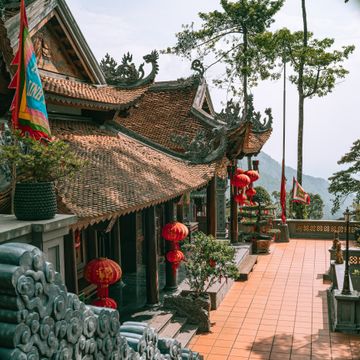
The funny thing is: all of these are true.
China is one of the few countries where you can see a 1,000-year-old temple in the morning, take a high-speed train in the afternoon, eat a $3 bowl of noodles for dinner, and then walk through a neon-lit city that looks like a science fiction movie at night.
For first-time visitors, China is especially good if you love:
1. History and ancient culture
2. Big cities and modern architecture
3. Street food and local restaurants
4. High-speed trains
5. Mountains, rivers, deserts, rice 6. terraces, and karst landscapes
6. Tea culture
7. Night markets
8. Photography
9. Budget travel with surprisingly good value
10. A little bit of chaos, but in a fun way

Is China Good for First-Time Travelers?
Yes, but with one condition: you should prepare before you arrive.
China is not like Thailand or Japan, where many tourist systems are already very familiar to international visitors. In China, the infrastructure is excellent, but it is built mainly for Chinese users.
That means the country is very convenient if you know the apps, but confusing if you arrive with only cash, Google Maps, and hope.
Hope is beautiful. But hope cannot help you scan a QR code at a noodle shop.

WHEN TO GO
Best Time to Visit China
China is huge, so the best time depends on where you go.
But generally speaking, the best months for a first China trip are:

March to May: Spring
Spring is one of the best seasons to visit China. The weather is usually mild, flowers are blooming, and cities feel alive again after winter.
Good for:
Spring is especially beautiful in places like Hangzhou, Suzhou, and Yunnan. If you like flowers, gardens, and walking around without melting, spring is a good choice.
- Beijing
- Shanghai
- Hangzhou
- Suzhou
- Chengdu
- Xi’an
- Guilin
- Yunnan
September to November: Autumn
Autumn might be my favorite travel season in China.
The weather is cooler, skies are often clearer, and many places look beautiful with autumn colors.
Good for:
If you want comfortable weather and nice photos, autumn is probably the safest choice.
- Beijing
- Xi’an
- Chengdu
- Chongqing
- Zhangjiajie
- Guilin
- Huangshan
- Yunnan
- Inner Mongolia
Summer: June to August
Summer can be hot. Very hot.
In cities like Chongqing, Chengdu, Wuhan, Nanjing, and Guangzhou, summer can feel like someone opened a giant steam cooker and forgot to turn it off.
But summer is still good for:
Just remember: popular attractions can be crowded because Chinese students are on summer vacation.
- Yunnan
- Qinghai
- Tibet
- Inner Mongolia
- Guizhou
- Mountain areas
- Family travel during school holidays
Winter: December to February
Winter is cold in northern China, but it can be beautiful.
Good for:
Winter is also a good time for cheaper hotels in many cities, except during Chinese New Year.
- Harbin Ice Festival
- Beijing winter scenery
- Northeast China snow trips
- Yunnan if you want mild weather
- Hainan if you want beaches
- Hot pot cities like Chengdu and Chongqing
CROWD CALENDAR
Times You May Want to Avoid
China has some travel periods when crowds become legendary.
I mean, truly legendary.

If you are not ready for big crowds, try to avoid:
Chinese New Year
Usually in January or February.
This is the biggest family holiday in China. Many people travel home, shops may close, train tickets can be hard to buy, and prices can rise.
It can be culturally interesting, but not always easy for first-time visitors.
Labor Day Holiday
Around May 1.
This is a short national holiday, and many attractions become extremely busy.
National Day Golden Week
October 1 to October 7.
This is one of the busiest travel periods in China. Famous attractions can feel like the whole country had the same idea at the same time.
If you travel during Golden Week, book everything early and prepare your mind.
And maybe your elbows.
ENTRY RULES
Do You Need a Visa to Visit China?
Maybe yes, maybe no. It depends on your nationality, passport type, purpose of travel, and length of stay.
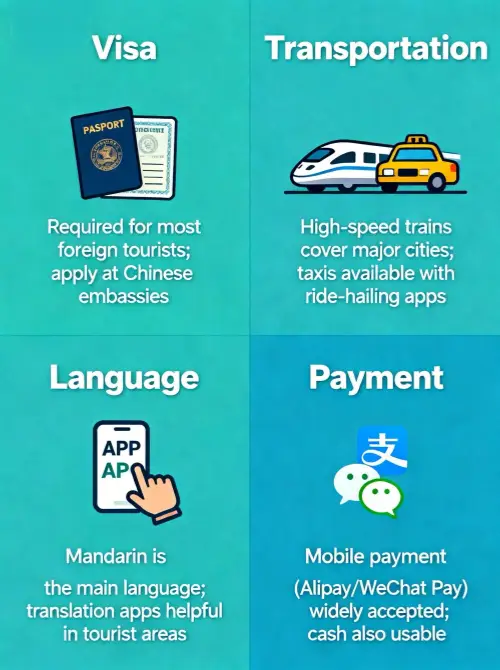
China’s visa policies have changed a lot in recent years, and they are still changing. Some travelers can enter China visa-free for short stays. Some can use transit visa-free policies. Others still need to apply for a tourist visa before arrival.

As of 2026, ordinary passport holders from many countries can enter China visa-free for tourism, business, visiting friends or relatives, exchange, or transit for up to 30 days under certain policies.
But please do not rely only on a blog post for visa rules.
Before you book your flight, check the official Chinese embassy, consulate, or visa center website for your country.
This is important because visa rules are like hot pot soup — they can change while you are still looking at them.
Common China Entry Options
For tourists, the main options are usually:
- Visa-free entry if your nationality qualifies
- Tourist visa, often called an L visa
- 240-hour visa-free transit if your route qualifies
- Special regional visa-free policies, such as Hainan in certain cases
What Is the 240-Hour Visa-Free Transit Policy?
China has a transit visa-free policy that allows eligible travelers from certain countries to stay in selected regions of China for up to 240 hours, which is 10 days, when transiting to a third country or region.
For example, your route might be:
Bangkok → Shanghai → Seoul
Or:
London → Beijing → Tokyo
The key idea is that you are transiting through China to another destination, not simply flying round-trip in and out of the same country.
Important: you must check eligible nationalities, ports of entry, allowed regions, and route rules before using this policy.
Do not improvise this at the airport.
Airport staff do not enjoy travel poetry.
TRIP LENGTH
How Many Days Do You Need in China?
For a first trip, I usually recommend 10 to 14 days.
China is too big for a short checklist trip, but you also do not need to see everything in one visit.
Actually, please do not try to see everything in one visit.
China will defeat you.
7 Days in China
Good for one region or two major cities.
Example:
A 7-day trip is possible, but you need to keep it focused.
- Beijing + Shanghai
- Shanghai + Hangzhou + Suzhou
- Chengdu + Chongqing
- Xi’an + Beijing
- Guilin + Yangshuo
10 Days in China
This is a much better first-trip length.
Example route:
This gives you history, food, pandas, modern cities, and high-speed train experience.
- Beijing: 3 days
- Xi’an: 2 days
- Chengdu: 3 days
- Shanghai: 2 days
14 Days in China
This is ideal for a deeper first trip.
Example route:
Or you can do a more scenic route:
With two weeks, you can travel without feeling like a suitcase with legs.
- Beijing: 3 days
- Xi’an: 2 days
- Chengdu: 3 days
- Chongqing: 2 days
- Shanghai: 2 days
- Hangzhou or Suzhou: 2 days
- Shanghai
- Hangzhou
- Guilin
- Yangshuo
- Chengdu
- Chongqing
CITY GUIDE
Best Cities in China for First-Time Visitors
China has many amazing cities, but for your first trip, some are easier and more rewarding than others.
Here are my personal recommendations.

Beijing: Best for History and First-Time China Culture
Beijing is the classic first stop.
If you want imperial history, old neighborhoods, the Great Wall, roast duck, giant squares, and serious “I am in China now” energy, Beijing is the place.
Why Visit Beijing?
Beijing gives you the most famous historical sites in China:
For first-time visitors, Beijing helps you understand China’s political and cultural history.
- The Great Wall
- Forbidden City
- Temple of Heaven
- Summer Palace
- Tiananmen Square
- Hutongs
- Lama Temple
- Beihai Park
How Many Days in Beijing?
I recommend 3 to 4 days.
One day for the Forbidden City and central Beijing, one day for the Great Wall, one day for hutongs and temples, and one extra day if you like slower travel.
Lukas Tip
Book Forbidden City tickets early. It is one of those attractions where “I will buy it tomorrow” can become “I will cry tomorrow.”

Shanghai: Best for Modern China
Shanghai is stylish, international, and very easy for first-time visitors.
It has skyscrapers, coffee shops, art spaces, shopping streets, riverside views, and excellent hotels. It is not the most “ancient China” city, but it shows you modern China very well.
Why Visit Shanghai?
Good for:
- First-time travelers who want comfort
- Modern city views
- The Bund
- Great restaurants
- Cafes and nightlife
- Day trips to Hangzhou or Suzhou
- Easier English environment compared with many cities
How Many Days in Shanghai?
2 to 3 days is enough for most first-time visitors.
Add 1 or 2 more days if you want to visit Suzhou, Hangzhou, or nearby water towns.
Lukas Tip
Do not only stay around the Bund. Walk into older neighborhoods, try local noodles, and explore small streets. Shanghai is not just skyline photos.
Although, yes, the skyline photos are very nice. We are not pretending.
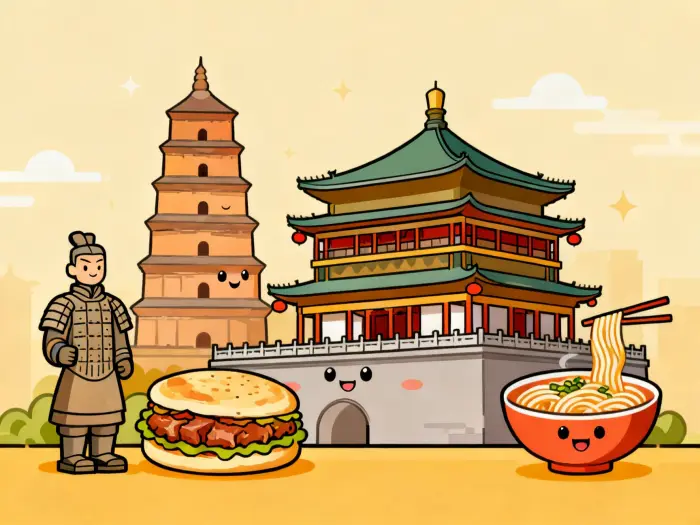
Xi’an: Best for Ancient China and the Terracotta Warriors
Xi’an is one of the best cities for first-time visitors because it is historic, walkable, and full of food.
It was the starting point of the ancient Silk Road and one of China’s old capitals.
Why Visit Xi’an?
Good for:
- Terracotta Warriors
- Ancient City Wall
- Muslim Quarter
- Shaanxi noodles
- History lovers
- First-time China itineraries
How Many Days in Xi’an?
2 days is usually enough.
One day for the Terracotta Warriors and one day for the city wall, Muslim Quarter, and local food.
Lukas Tip
Xi’an food is very underrated by foreigners. Try biangbiang noodles, roujiamo, and yangrou paomo.
Your stomach will respect you.

Chengdu: Best for Food, Pandas, and Relaxed Local Life
Now we come to my favorite part.
Chengdu.
Why Visit Chengdu?
Good for:
Chengdu is not as visually dramatic as Beijing or Shanghai at first glance. It does not scream at you.
It slowly feeds you, gives you tea, lets you sit under trees, and then destroys your spice tolerance with hot pot.
Beautiful city.
Dangerous city for your diet.
- Giant pandas
- Sichuan food
- Hot pot
- Tea houses
- Local neighborhoods
- Day trips to Leshan or Mount Qingcheng
- A slower lifestyle
- Night food streets
- Real local China
How Many Days in Chengdu?
3 days is a good start.
You can do:
- Day 1: Pandas, city center, People’s Park, tea house
- Day 2: Wuhou Shrine, Jinli, Kuanzhai Alley, hot pot
- Day 3: Leshan Giant Buddha or local food exploration
Lukas Tip
Do not only eat at famous restaurants. Some of the best Chengdu food is in small neighborhood places called 苍蝇馆子, cāngyíng guǎnzi, literally “fly restaurants.”
The name sounds terrible. The food is often amazing.
Welcome to China.

Chongqing: Best for Cyberpunk Views and Spicy Food
Chongqing is wild.
It is a mountain city, a river city, a hot pot city, and sometimes it feels like the streets were designed by someone playing 4D chess.
Why Visit Chongqing?
Good for:
- Hot pot
- Night views
- Hongya Cave
- Liziba monorail
- Mountain city walks
- Yangtze River views
- Cyberpunk photography
- Spicy food lovers
How Many Days in Chongqing?
2 to 3 days is good.
It pairs very well with Chengdu because the high-speed train between the two cities is fast and convenient.
Lukas Tip
Wear comfortable shoes. Chongqing is not a gentle flat city. Your legs will learn geography.

Guilin and Yangshuo: Best for Classic Chinese Landscapes
If you have seen traditional Chinese paintings with mountains and rivers, Guilin and Yangshuo are where that feeling becomes real.
Karst mountains, bamboo rafts, rivers, villages, rice noodles, and countryside views.
Why Visit Guilin and Yangshuo?
Good for:
- Nature
- Photography
- Li River scenery
- Cycling
- Slower travel
- First-time visitors who want landscapes
How Many Days?
3 days is good.
Spend less time in Guilin city and more time in Yangshuo if you want beautiful scenery.
Lukas Tip
Wake up early. The scenery is more peaceful, the light is better, and you avoid some tour group crowds.
Also, Guilin rice noodles are simple but addictive.

Yunnan: Best for Scenery, Culture, and Slower Travel
Yunnan is one of the most beautiful provinces in China.
It has mountains, old towns, minority cultures, lakes, rice terraces, flowers, mushrooms, and some of the most comfortable weather in the country.
Best Places in Yunnan
- Kunming
- Dali
- Lijiang
- Shangri-La
- Xishuangbanna
- Yuanyang Rice Terraces
Why Visit Yunnan?
Good for:
- Nature
- Culture
- Photography
- Mild weather
- Slower trips
- Tea
- Hiking
- Ethnic minority food
How Many Days?
For Yunnan, I recommend at least 5 to 7 days.
It is not a place to rush.
Lukas Tip
Yunnan looks peaceful, but distances can be long. Do not plan too many places in too few days.
The map lies. Mountains are involved.
ROUTE IDEAS
Suggested China Itineraries for First-Time Visitors
Here are some simple China itinerary ideas.
You can adjust them depending on your travel style.
7-Day China Itinerary: Classic First Taste
Best for: First-time visitors with limited time
Day 1: Arrive in Beijing
Day 2: Forbidden City, Tiananmen area, hutongs
Day 3: Great Wall day trip
Day 4: High-speed train to Xi’an, city wall
Day 5: Terracotta Warriors, Muslim Quarter
Day 6: Fly or train to Shanghai, the Bund
Day 7: Shanghai neighborhoods, departure
This route is fast but classic.
You get history, the Great Wall, ancient China, and modern China.
10-Day China Itinerary: History, Food, and Pandas
Best for: A balanced first trip
Day 1: Arrive in Beijing
Day 2: Forbidden City and hutongs
Day 3: Great Wall
Day 4: Train to Xi’an
Day 5: Terracotta Warriors and Xi’an food
Day 6: Train or fly to Chengdu
Day 7: Panda Base, People’s Park, tea house
Day 8: Leshan Giant Buddha or Chengdu food day
Day 9: Fly to Shanghai
Day 10: Shanghai and departure
This is one of my favorite first-time China routes.
Why?
Because you get Beijing’s history, Xi’an’s ancient culture, Chengdu’s food and pandas, and Shanghai’s modern energy.
Very nice. Very complete. Your camera and stomach will both work hard.
14-Day China Itinerary: Local Friend Version
Best for: Travelers who want more depth
Day 1: Arrive in Beijing
Day 2: Forbidden City and Temple of Heaven
Day 3: Great Wall
Day 4: Hutongs, Lama Temple, local food
Day 5: Train to Xi’an
Day 6: Terracotta Warriors and Muslim Quarter
Day 7: Train to Chengdu
Day 8: Panda Base, People’s Park, hot pot
Day 9: Leshan Giant Buddha day trip
Day 10: Chengdu local neighborhoods and food
Day 11: Train to Chongqing
Day 12: Chongqing city walks, Hongya Cave, hot pot
Day 13: Fly to Shanghai
Day 14: Shanghai and departure
This route gives you a more real feeling of China.
You will see imperial China, ancient China, spicy southwest China, mountain-city China, and modern China.
Also, by the end, you may start scanning QR codes like a local.
This is when China accepts you.
GETTING AROUND
How to Get Around China
China is one of the easiest countries in the world for domestic transport once you understand the system.
The high-speed rail network is excellent, domestic flights are common, metros are cheap, and ride-hailing is convenient.

But again: apps are important.
High-Speed Trains in China
High-speed trains are one of the best things about traveling in China.
They are fast, comfortable, usually punctual, and connect many major cities.
For example:
For many routes, trains are better than flights because you avoid airports, long security lines, and delays.
- Beijing to Shanghai: around 4.5 to 6 hours
- Chengdu to Chongqing: around 1 to 2 hours
- Shanghai to Hangzhou: around 1 hour
- Xi’an to Chengdu: around 3 to 4 hours
- Beijing to Xi’an: around 4 to 6 hours
How to Book Train Tickets
Foreign travelers can book China train tickets through:
Trip.com is often the easiest option for foreign tourists because the interface is more international.
- Trip.com
- Railway 12306 official platform
- Travel agencies
- Hotel concierge in some cases
Train Station Tips
China’s train stations can be huge.
Arrive early, especially in big cities.
For high-speed trains, I usually suggest arriving 45 to 60 minutes before departure. If it is a major holiday or your first time, arrive even earlier.
You usually need your passport to enter the station and board.
Lukas Tip
Check the station name carefully.
Chinese cities often have multiple train stations:
Do not go to the wrong station unless you enjoy panic as a travel experience.
- Beijing South
- Beijing West
- Shanghai Hongqiao
- Shanghai Railway Station
- Chengdu East
- Chengdu South

Domestic Flights in China
Domestic flights are useful for long distances.
For example:
Flights are usually affordable if booked early, but delays can happen.
If the distance is under 5 hours by high-speed train, I usually prefer the train.
- Beijing to Yunnan
- Shanghai to Chengdu
- Guangzhou to Harbin
- Chengdu to Xinjiang
Metro Systems in Chinese Cities
Most major Chinese cities have clean, safe, and cheap metro systems.
Beijing, Shanghai, Guangzhou, Shenzhen, Chengdu, Chongqing, Xi’an, Hangzhou, Nanjing, Wuhan, and many other cities all have good metro networks.
Metro signs usually include English, so it is one of the easiest ways for foreigners to get around.
How to Pay for Metro
Depending on the city, you can use:
Alipay is usually very useful for metro travel.
- Alipay transport QR code
- WeChat Pay transport code
- Metro ticket machines
- Transit cards
- Sometimes foreign cards in limited systems
Lukas Tip
Avoid rush hour if you have luggage.
Chinese metro rush hour can make you feel like a dumpling in a bamboo steamer.
Taxis and Ride-Hailing in China
Taxis are common, but many drivers do not speak English.
The most useful ride-hailing app is DiDi, which is like China’s Uber.
You can use DiDi through its app or sometimes inside Alipay.
Taxi Tips
Chinese cities often have many hotels or restaurants with similar names.
Your “Panda Hotel” may not be the Panda Hotel you think it is.
Pandas are popular. Names are repeated. Chaos begins.
- Prepare your destination in Chinese.
- Use a map pin if possible.
- Do not expect drivers to understand English names.
- Always check that you are going to the correct branch or address.
DIGITAL TOOLKIT
Essential Apps for Traveling in China
Apps are the key to traveling smoothly in China.
Before you arrive, download and set up the important ones.
Do not wait until you land, because some apps, websites, or verification steps may be harder once you are already in China.
Alipay: Your Most Important Travel App in China
If I could recommend only one China travel app, it would be Alipay.
Alipay can help you with:
For foreign travelers, Alipay now supports international bank cards in many situations.
You should set it up before your trip and test it if possible.
- Mobile payments
- Metro QR codes
- DiDi ride-hailing
- Some hotel bookings
- Some attraction tickets
- Mini programs
- Translation in some cases
Where Can You Use Alipay?
Almost everywhere:
China is very cashless. Many places still accept cash legally, but in daily life, mobile payment is much more convenient.
- Restaurants
- Convenience stores
- Cafes
- Shopping malls
- Taxis
- Street food stalls
- Metro systems
- Tourist attractions
- Vending machines
Lukas Tip
Always bring some cash as backup, but do not rely only on cash.
Cash is like an umbrella in Chengdu: useful sometimes, but not enough for your whole life.
WeChat and WeChat Pay
WeChat is more than a messaging app in China.
It is used for:
WeChat Pay can also be very useful, especially because some places are more WeChat-based than Alipay-based.
- Messaging
- Payments
- Restaurant menus
- Hotel communication
- Mini programs
- Official accounts
- Booking services
- Sharing contacts
Should You Set Up Both Alipay and WeChat Pay?
Yes, if possible.
For first-time visitors, I recommend:
Some restaurants use QR code menus inside WeChat. Some hotels may contact you through WeChat. Some small businesses prefer WeChat Pay.
Having both makes your trip easier.
- Alipay as your main payment tool
- WeChat as your communication and backup payment tool
Lukas Tip
Set up WeChat before arriving. Account verification can sometimes be annoying.
China travel is already full of small puzzles. Do not add unnecessary puzzles.
Translation Apps
A translation app is essential.
Useful options include:
For menus and signs, camera translation is very useful.
But be careful: translation apps can make funny mistakes with Chinese dishes.
Sometimes “夫妻肺片” becomes something terrifying in English. It is actually a famous Sichuan cold beef dish, not a crime scene.
Welcome to Chinese menu translation.
- Apple Translate
- Microsoft Translator
- Pleco for Chinese dictionary
- Baidu Translate
- Google Translate if you have reliable access
Maps in China
Google Maps is not reliable in mainland China.
For navigation, Chinese apps are better:
Amap and Baidu Maps are the most accurate, but they are mostly in Chinese.
Apple Maps may be easier for foreign travelers.
- Amap, also called Gaode Maps
- Baidu Maps
- Apple Maps, which can work better than Google Maps in China
Lukas Tip
Save your hotel address in Chinese.
Not just English.
Chinese taxi drivers and locals will understand the Chinese address much more easily.
Internet in China: Wi-Fi, SIM Cards, eSIM, and VPN
Internet is one of the biggest things foreign travelers need to prepare for.
Many international websites and apps do not work normally in mainland China without special access.
This can include:
If you need these apps, prepare before arriving.
- Gmail
- YouTube
- X / Twitter
- Some news websites
- Some cloud services
Should You Get a SIM Card or eSIM for China?
Yes.
You have a few options:
Option 1: International Roaming
This is the easiest but often expensive.
The advantage is that some international roaming plans may allow access to your usual apps without the same restrictions as local networks.
Check with your provider before traveling.
Option 2: China Local SIM Card
Local SIM cards can be cheaper and useful for calls, data, and local verification.
You can buy them at airports or telecom stores, but you usually need your passport.
Option 3: Travel eSIM
Travel eSIMs are convenient if your phone supports eSIM.
Some eSIMs route traffic through outside networks, which may make access to international apps easier. But quality depends on the provider.
Lukas Tip
Do not arrive in China with no internet plan.
A traveler without internet in China is like a hot pot without soup.
Technically possible?
No. Actually, no.
Do You Need a VPN in China?
If you want to use Google, Gmail, YouTube, Instagram, WhatsApp, Facebook, or many other international platforms, you should prepare a reliable solution before you arrive.
Many VPN websites and apps may be difficult to download once you are already in China, so set everything up in advance.
Important: internet rules in China can change, and VPN reliability can vary. Some work well one month and poorly another month.
I will not promise that any specific VPN will always work.
That would be lying, and also brave in a stupid way.
Lukas Tip
Prepare more than one internet option.
For example:
Screenshots are underrated.
When apps fail, screenshots become heroes.
- eSIM or international roaming
- A VPN installed before arrival
- Offline maps
- Hotel address saved offline
- Important booking screenshots saved on your phone
PAYMENTS
Money and Payments in China
China is one of the most mobile-payment-heavy countries in the world.
In many places, people pay by scanning QR codes.
You can still use cash in many situations, and merchants are generally expected to accept RMB cash, but daily life is much smoother with mobile payment.
Can You Use Credit Cards in China?
International credit cards are accepted at some hotels, airports, luxury malls, and larger tourist businesses.
But many normal restaurants, small shops, street food stalls, taxis, and local stores do not directly accept foreign credit cards.
This surprises many visitors.
Your Visa card may be powerful in Paris, but in a small noodle shop in Chengdu, it may become a decorative plastic rectangle.
Use Alipay or WeChat Pay instead.
Should You Bring Cash?
Yes, bring some RMB cash as backup.
But you do not need to carry huge amounts.
Good uses for cash:
I recommend keeping a few hundred RMB in small notes.
Do not only bring large 100 RMB notes if you plan to buy a 3 RMB bottle of water from a tiny shop. That is how you become everyone’s math problem.
- Backup payment
- Very small vendors
- Emergency situations
- Some older shops
- Places where your app fails
ATMs in China
You can withdraw RMB from many ATMs using international cards, especially in major cities.
Look for banks like:
Always inform your bank before traveling, and check foreign withdrawal fees.
- Bank of China
- ICBC
- China Construction Bank
- Agricultural Bank of China
- China Merchants Bank
WHERE TO STAY
Where to Stay in China
China has a huge range of accommodation, from budget hostels to luxury hotels.
But foreign travelers should know one important thing:
Not every hotel in China is allowed or prepared to host foreign guests.
This is less of a problem than in the past, especially in major cities, but it can still happen in smaller places.
Best Booking Platforms
Foreign travelers commonly use:
Trip.com is especially useful in China because it often has better local coverage.
- Trip.com
- Booking.com
- Agoda
- Direct hotel websites
- International hotel chains
Hotel Tips for First-Time Visitors
When booking hotels in China, check:
- Can the hotel accept foreign guests?
- Is the location near a metro station?
- Are recent reviews good?
- Is the hotel name and address available in Chinese?
- Does the room have a private bathroom?
- Is there an elevator if you have luggage?
- Is the hotel close to the attractions you care about?
Best Areas to Stay
In general, first-time visitors should stay near metro lines or central districts.
Do not stay far outside the city just to save a little money. Chinese cities are huge.
Saving $15 on a hotel and then spending your soul on commuting is not a good trade.
FOOD BASICS
Food in China: What First-Time Visitors Should Know
Food may be the best reason to visit China.
But Chinese food in China is not the same as Chinese food overseas.
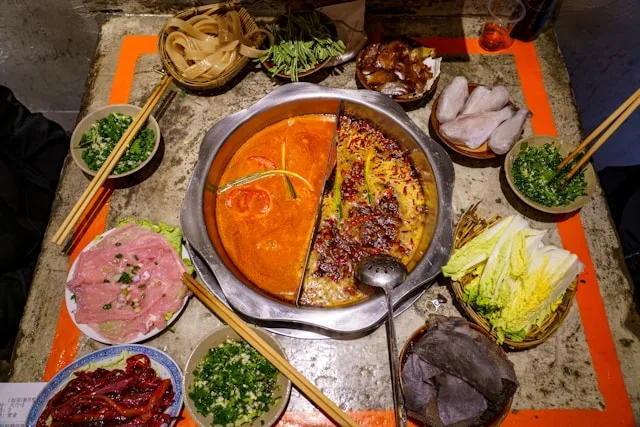
It is more regional, more diverse, and often much better.
Also, sometimes more confusing.
Beautifully confusing.
REGIONAL FOOD
Regional Chinese Food: Not Just One Cuisine
China has many regional cuisines.
Some famous ones include:
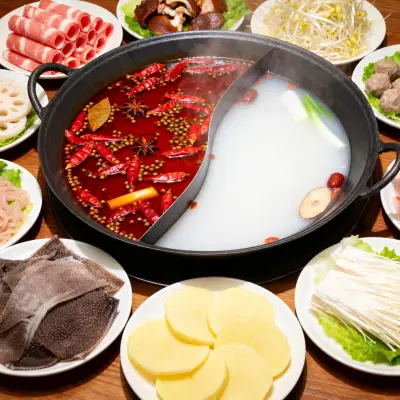
Sichuan Cuisine
Spicy, numbing, bold, fragrant.
Famous dishes:
Sichuan food is not just spicy. The key flavor is 麻辣, málà, which means numbing and spicy.
The numbing feeling comes from Sichuan peppercorns.
Your mouth may vibrate slightly.
This is normal. Probably.
- Hot pot
- Mapo tofu
- Kung pao chicken
- Twice-cooked pork
- Dan dan noodles
- Boiled fish
- Dry pot
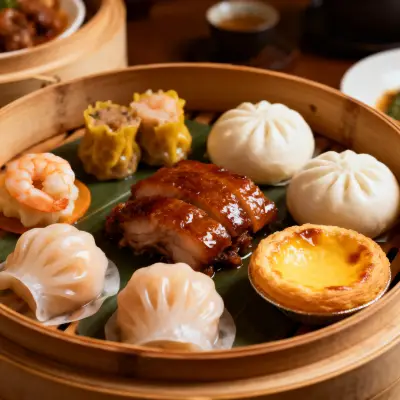
Cantonese Cuisine
Fresh, delicate, balanced.
Famous for:
Good for travelers who prefer lighter flavors.
- Dim sum
- Roast goose
- Wonton noodles
- Claypot rice
- Steamed seafood
- Congee
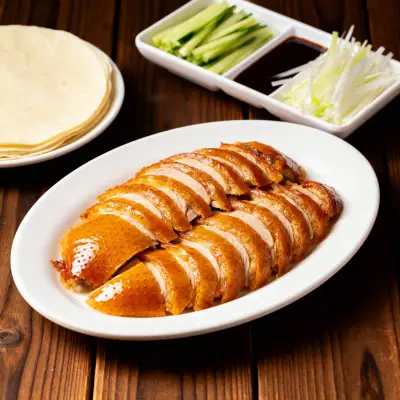
Beijing Food
Hearty northern food.
Famous for:
- Peking duck
- Zhajiangmian
- Dumplings
- Hot pot
- Lamb dishes
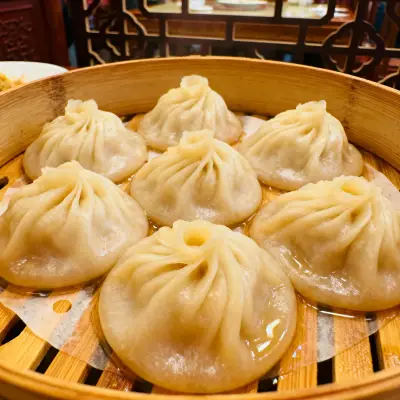
Shaanxi Food
Xi’an food is amazing.
Try:
- Biangbiang noodles
- Roujiamo
- Liangpi
- Yangrou paomo
- Cumin lamb
Yunnan Food
Fresh, colorful, and sometimes surprising.
Try:
- Crossing-the-bridge rice noodles
- Wild mushrooms
- Yunnan ham
- Dai-style grilled fish
- Pu’er tea
ORDERING FOOD
How to Order Food in China
Ordering food can be challenging if you do not read Chinese.
But it is very possible.
Option 1: Use Picture Menus
Many restaurants have photo menus. Pointing is a universal language.
A very elegant language.
Option 2: Use Translation Apps
Camera translation helps with menus.
Just know that dish names may translate strangely.
Option 3: Use Dianping or Meituan
Dianping and Meituan are local apps for restaurant reviews, deals, and menus.
They are mostly Chinese, but photos are very useful.
Look at what locals ordered and show the picture to the waiter.
This is one of my favorite tricks.
Option 4: Say “老板,推荐一下”
If you want to be brave, say:
老板,推荐一下
Lǎobǎn, tuījiàn yíxià
Boss, please recommend something.
This works best in small local restaurants.
Sometimes the boss will choose well.
Sometimes the boss will destroy you with spice.
Life is risk.
FOOD SAFETY
Food Safety in China
Most travelers eat safely in China, but your stomach may need time to adjust.
Basic tips:
Street food can be delicious, but do not challenge your stomach immediately after a long flight.
Your stomach is also jet-lagged.
Respect it.
- Eat at busy places with high turnover.
- Drink bottled or boiled water.
- Be careful with raw foods in small local places.
- Start slowly with spicy food.
- Carry stomach medicine.
- Wash your hands or use sanitizer.
- Avoid eating too much street food on your first day.
WATER
Can You Drink Tap Water in China?
No, do not drink tap water directly.
Chinese people usually boil water before drinking it.
Hotels often provide bottled water, kettles, or water dispensers.
Use bottled or boiled water for drinking.
Brushing teeth with tap water is usually fine in major cities, but if you have a sensitive stomach, use bottled water.
PRACTICAL REALITY
Chinese Toilets: A Small Survival Guide
We need to talk about toilets.
China has many modern toilets, especially in malls, airports, hotels, high-speed trains, and newer attractions.
But squat toilets are still common in public places, older areas, parks, train stations, and some restaurants.
What to Carry
Always carry:
Do not assume public toilets will provide toilet paper.
This is one of the most important China travel tips.
Not glamorous. Very important.
- Tissues
- Wet wipes
- Hand sanitizer
Squat Toilet Tips
If you are not used to squat toilets:
You came to China for transformation.
Here it is.
- Empty your pockets first.
- Keep your balance.
- Face the correct direction.
- Do not panic.
- Consider it a cultural leg workout.
SAFETY
Is China Safe for Travelers?
In general, China is very safe for travelers, especially when it comes to violent crime.
Many foreign visitors are surprised by how safe Chinese cities feel at night.
It is common to see people walking around late, eating barbecue, taking the metro, or using ride-hailing without much fear.
But safe does not mean nothing can go wrong.
Common Travel Risks
The main risks for tourists are usually:
- Getting lost
- Payment problems
- Language misunderstandings
- Overpriced tourist shops
- Tea house or bar scams in very touristy areas
- Traffic habits
- Food adjustment
- Crowds
- Losing your passport
- Booking the wrong train station
Scam Awareness
China is not a scam-heavy country compared with some destinations, but tourist scams can happen.
Be careful if a stranger in a major tourist area suddenly becomes very friendly and invites you to:
This is especially common around famous tourist areas in big cities.
Not everyone friendly is a scammer, of course.
But if someone’s friendship becomes expensive very quickly, leave.
- A tea ceremony
- An art student exhibition
- A bar
- A private shopping place
Emergency Numbers in China
Useful numbers:
If you stay at a hotel, the front desk can often help with emergencies or translation.
- Police: 110
- Ambulance: 120
- Fire: 119
LANGUAGE HELP
Language Barrier in China
English is not widely spoken in many parts of China.
In international hotels, airports, and major tourist attractions, you may find English support. But in local restaurants, taxis, small shops, and smaller cities, do not expect much English.
This is not because people are unfriendly.
Many locals are kind and willing to help, but they may be shy or nervous about speaking English.
Useful Chinese Phrases for Travelers
Here are a few simple phrases:
Hello
你好
Nǐ hǎo
Thank you
谢谢
Xièxiè
How much is this?
多少钱?
Duōshǎo qián?
I don’t eat spicy food
我不吃辣
Wǒ bù chī là
Important in Sichuan. Very important.
A little spicy is okay
微辣可以
Wēi là kěyǐ
Careful: in Sichuan, “a little spicy” may still be spicy.
Sichuan people have different physics.
Where is the bathroom?
洗手间在哪里?
Xǐshǒujiān zài nǎlǐ?
I am a foreign tourist
我是外国游客
Wǒ shì wàiguó yóukè
Can you help me?
可以帮我一下吗?
Kěyǐ bāng wǒ yíxià ma?
I want this one
我要这个
Wǒ yào zhège
Pointing plus this phrase can solve many problems.
LOCAL HABITS
Chinese Culture Tips for First-Time Visitors
China has its own social habits. You do not need to understand everything, but a few basics help.
Personal Space and Crowds
China can feel crowded, especially in big cities and popular attractions.
People may stand closer than you expect. Lines may feel different. Metro stations can be intense during rush hour.
Try not to take everything personally.
In crowded places, people are often just trying to move.
It is not always rude. Sometimes it is survival choreography.
Noise and Atmosphere
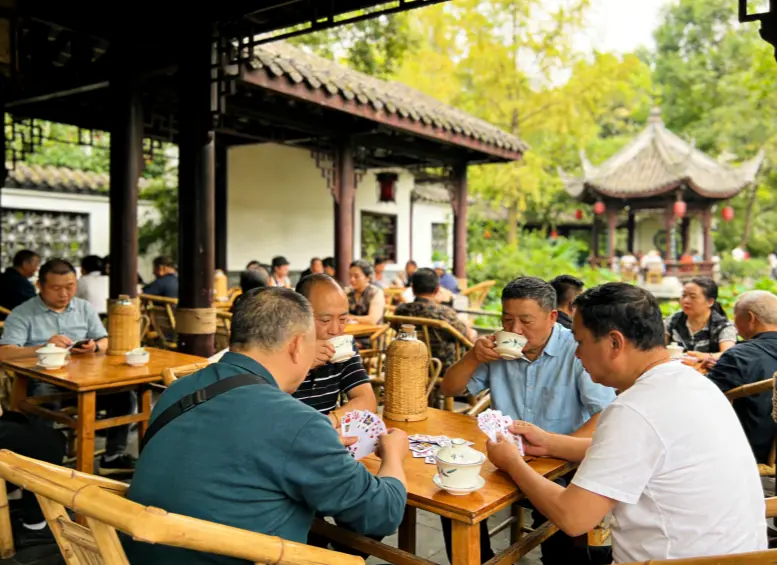
Restaurants can be loud. Markets can be loud. Parks can be loud. Aunties dancing in public squares can be loud.
China is often full of life.
If you want quiet, look for tea houses, parks, temples, bookstores, or hotel lounges.
If you want energy, just walk outside after dinner.
Dining Etiquette
Chinese dining is often shared.
Dishes are placed in the middle, and everyone eats together.
Some tips:
In China, “service” can feel different. Sometimes staff are efficient but not overly friendly in the Western style.
Do not worry. Your noodles will still arrive.
That is the main relationship.
- Do not stick chopsticks upright in rice.
- It is polite to share dishes.
- Try a little bit of everything if you can.
- Toasting may happen at dinners.
- In casual restaurants, service may be fast and direct, not super soft and smiley.
- Hot water is common.
Tipping in China
Tipping is not common in mainland China.
You usually do not need to tip in restaurants, taxis, hotels, or casual services.
High-end hotels or international tours may be different, but for normal daily travel, tipping is not expected.
This is nice because you can focus on the food instead of calculating percentages while holding chopsticks.
Shopping and Bargaining
In malls, supermarkets, and normal stores, prices are fixed.
In markets or tourist souvenir areas, bargaining may be possible.
Be polite, smile, and do not bargain too aggressively unless you know the context.
Also, remember: if the price is already very low, maybe just let the auntie win.
Peace is valuable.
APP CHECKLIST
Best Travel Apps and Websites for China
Here is a simple app checklist for first-time China travelers.
Must-Have Apps
- Alipay
- DiDi
- Trip.com
- Translation app
- Apple Maps or Amap
- Airline app
- eSIM or telecom app if needed
Very Useful Apps
- Dianping
- Meituan
- Xiaohongshu
- Railway 12306
- Pleco
- Baidu Translate
For Food and Local Discovery
Dianping and Xiaohongshu are very useful if you want local places.
Xiaohongshu, also called RED, is especially popular for finding cafes, restaurants, photo spots, and local travel ideas.
But be careful: some places are popular because they look good in photos, not because they are actually amazing.
In Chinese, we sometimes call this 网红店, wǎnghóng diàn, meaning internet-famous shop.
Some are great.
Some are just expensive chairs and lighting.
Use your judgment.
PACKING LIST
What to Pack for China
Packing depends on season and region, but here are essentials.
Important Documents
- Passport
- Visa if required
- Hotel bookings
- Return or onward flight proof
- Travel insurance
- Copies of important documents
- Emergency contacts
Tech Items
- Phone
- Charger
- Power bank
- Universal adapter
- eSIM or SIM plan
- VPN or internet solution if needed
- Offline maps
- Translation app
- Screenshots of bookings
Daily Items
- Tissues
- Wet wipes
- Hand sanitizer
- Comfortable shoes
- Reusable water bottle
- Small umbrella
- Basic medicine
- Stomach medicine
- Small amount of cash
Clothing
Pack according to region.
China can be freezing in Harbin and tropical in Hainan at the same time.
Do not pack for “China.”
Pack for your actual cities.
China is not one weather.
COSTS
Budget: How Much Does China Travel Cost?
China can be very affordable, but it depends on your travel style.
Compared with Japan, Western Europe, or the United States, daily travel in China can offer excellent value.
Budget Traveler
Approximate daily budget:
$30 to $60 per day
This may include:
- Budget hotel or hostel
- Local food
- Metro
- Some attractions
- High-speed trains between nearby cities
Mid-Range Traveler
Approximate daily budget:
$70 to $150 per day
This may include:
- Comfortable hotels
- Good local restaurants
- Some taxis or DiDi rides
- Major attractions
- High-speed rail between cities
Luxury Traveler
Approximate daily budget:
$200+ per day
China has many luxury hotels, private tours, fine dining restaurants, and premium experiences.
You can spend a lot if you want.
China will not stop you.
Food Costs
Local meals can be very affordable.
Examples:
- Simple noodles: 15 to 35 RMB
- Local restaurant meal: 30 to 80 RMB per person
- Hot pot: 80 to 200 RMB per person
- Coffee: 20 to 40 RMB
- Convenience store snacks: very affordable
Lukas Tip
If you want to save money, eat where locals eat.
If a small restaurant is busy, smells good, and has aunties shouting orders, you may have found treasure.
AVOID THESE
Common Mistakes First-Time Visitors Make in China
Let me save you some trouble.
Mistake 1: Relying on Google Maps
Google Maps is not reliable in mainland China.
Use Apple Maps, Amap, or Baidu Maps.
Mistake 2: Not Setting Up Alipay Before Arrival
Set up Alipay before your trip.
Payment problems are one of the most common first-day headaches.
Mistake 3: Planning Too Many Cities
China is huge.
Do not try to visit Beijing, Shanghai, Xi’an, Chengdu, Guilin, Zhangjiajie, Tibet, Yunnan, and Hong Kong in 10 days.
This is not a trip. This is a logistics punishment.
Mistake 4: Traveling During Golden Week Without Planning
If you travel during National Day Golden Week, book early and expect crowds.
Mistake 5: Not Carrying Tissues
I will repeat this forever.
Carry tissues.
Mistake 6: Assuming All Chinese Food Is the Same
Every region has different food.
Try local specialties.
Do not only eat fried rice.
Fried rice is nice, but China has more to say.
Mistake 7: Booking Hotels Too Far Away
Chinese cities are large.
Stay near metro stations or central areas.
Mistake 8: Not Saving Chinese Addresses
Always save hotel and destination addresses in Chinese.
English names are often not enough.
Mistake 9: Underestimating Spicy Food
Especially in Sichuan, Chongqing, Hunan, and Guizhou.
If you cannot eat spicy food, say clearly:
我不吃辣
Wǒ bù chī là
I do not eat spicy food.
If you say “a little spicy,” local people may interpret that creatively.
Mistake 10: Only Visiting the Most Famous Places
The Great Wall and Forbidden City are amazing, yes.
But China’s real charm is also in tea houses, local markets, noodle shops, parks, small streets, and everyday life.
Leave space for wandering.
LOCAL TIPS
Best China Travel Tips from a Local Friend
Here are my personal tips.

1. Wake Up Early for Famous Attractions
Chinese attractions get crowded.
Go early.
This is the difference between peaceful travel and becoming part of a human river.
2. Eat Breakfast Like a Local
Chinese breakfast is wonderful.
Try:
Hotel breakfast is okay, but local breakfast shops are better.
- Baozi
- Soy milk
- Youtiao
- Jianbing
- Rice noodles
- Wontons
- Congee
- Scallion pancakes
3. Use High-Speed Trains
They are one of the best ways to experience modern China.
4. Try One Local Specialty in Every City
In Chengdu, eat hot pot.
In Xi’an, eat biangbiang noodles.
In Beijing, try roast duck.
In Guilin, eat rice noodles.
In Yunnan, try mushrooms.
This is how your trip becomes delicious and educational.
5. Visit Parks
Chinese parks are amazing for people-watching.
You may see dancing, singing, tai chi, mahjong, card games, tea drinking, and grandparents living their best lives.
Parks show you real local life.
6. Do Not Fear Small Restaurants
Small local restaurants can be excellent.
Look for busy places with local customers.
If there are many people eating happily, that is usually a good sign.
7. Keep Screenshots of Everything
Train tickets, hotel address, attraction bookings, passport copy, payment confirmation.
Screenshots are your backup brain.
8. Be Flexible
China travel can be smooth, but sometimes things change.
Attractions close. Tickets sell out. Apps behave strangely. Weather happens.
Stay flexible and your trip will be much happier.
9. Learn a Few Chinese Words
Even simple Chinese makes locals smile.
You do not need perfect tones.
Trying is already nice.
10. Spend More Time in Fewer Places
This is my biggest advice.
China rewards slow travel.
One tea house afternoon in Chengdu may teach you more about local life than five rushed attractions.
FAQ
First-Time China Travel FAQ
Is China safe for tourists?
Yes, China is generally very safe for tourists, especially regarding violent crime. Most travelers feel comfortable walking around major cities at night. Still, you should watch your belongings, avoid tourist scams, follow local laws, and keep your passport safe.
Is China expensive to travel?
China can be very affordable compared with many developed countries. Local food, metro rides, and high-speed trains often offer great value. Luxury hotels and private tours can be expensive, but budget and mid-range travel are very possible.
Can foreigners use Alipay in China?
Yes, many foreign travelers can use Alipay by linking an international bank card. However, verification and card support can vary, so set it up before your trip and keep backup payment options.
Can foreigners use WeChat Pay in China?
Yes, WeChat Pay supports many foreign cards, and it is very useful for payments, restaurant menus, and mini programs. It is best to set up WeChat before arriving in China.
Do people speak English in China?
English is not widely spoken outside international hotels, airports, and major tourist attractions. Translation apps are very useful. Save addresses in Chinese and learn a few basic phrases.
Does Google Maps work in China?
Google Maps is not reliable in mainland China. Apple Maps, Amap, and Baidu Maps are better choices.
Can I use Instagram, WhatsApp, Gmail, or YouTube in China?
Many international apps and websites do not work normally in mainland China without preparation. If you need them, prepare an internet solution before you arrive.
Is Chinese food very spicy?
Some regional cuisines are spicy, especially Sichuan, Chongqing, Hunan, and Guizhou food. But many Chinese cuisines are not spicy, such as Cantonese, Jiangnan, Beijing, and many northern dishes.
Can I drink tap water in China?
No, do not drink tap water directly. Drink bottled or boiled water.
Are squat toilets common in China?
Yes, squat toilets are still common in some public places, although modern sitting toilets are also common in hotels, malls, airports, and newer buildings. Always carry tissues.
What is the best first-time China itinerary?
A good first-time route is Beijing, Xi’an, Chengdu, and Shanghai in 10 days. This gives you history, food, pandas, ancient culture, and modern city life.
How far in advance should I book China train tickets?
For normal periods, several days to two weeks in advance is usually fine. For holidays, book as early as possible.
Is China good for solo travelers?
Yes, China can be good for solo travelers because it is generally safe and transport is convenient. The main challenges are language, apps, and payment setup.
Is China family-friendly?
Yes, China can be very family-friendly. High-speed trains, parks, malls, family restaurants, and attractions are convenient. But plan carefully around crowds, toilets, and walking distances.
What should I avoid in China?
Avoid traveling during major holidays without planning, drinking tap water, relying only on Google Maps, carrying no tissues, booking hotels far from metro stations, and assuming everyone speaks English.
FINAL WORD
Final Thoughts: China Is Easier Than You Think, But Different
China can feel confusing before your first trip.
The apps are different. The language is different. The internet is different. The food is different. Even the toilets may be different.
But different does not mean impossible.
Once you understand the basic tools, China becomes one of the most fascinating countries to travel in.
You can ride a high-speed train across provinces, eat noodles in a tiny local shop, scan a QR code to pay, walk through ancient streets, drink tea in a park, see pandas in Chengdu, watch skyscrapers glow in Shanghai, climb the Great Wall near Beijing, and still feel like you have only touched the surface.
That is the beauty of China.
It is not one destination.
It is many worlds inside one country.
So prepare well, stay curious, eat bravely, carry tissues, and do not try to see everything in one trip.
China will still be here for your second visit.
And honestly?
After the first bowl of good noodles, there is a high chance you will want to come back.
See you in China,
Lukas