Chengdu — A City of Tea, Pandas, Spice, and Slow Living
If China were a person, Beijing would be the serious grandfather, Shanghai would be the stylish businessman, and Chengdu? Chengdu would be your best friend who invites you over for a long tea, a round of Mahjong, and a spicy hot pot dinner that lasts until midnight.
There is a famous Chinese saying: “Don’t enter Sichuan when you are young, and don’t leave Sichuan when you are old.” Why? Because this city is so comfortable, so relaxed, and the food is so good that you might just lose your “hustle.”
In Chengdu, we don’t live to work; we work so we can live. You’ll see it in the way the elderly sit in the parks for hours, the way the spicy aroma of chili oil drifts through every alley, and the way no one ever seems to be in a rush—even in the middle of a workday. We call this “Slow Life” (慢生活 – màn shēnghuó).
CHengDU City
This is Chengdu as we know it: not rushed, not polished for tourists, but full of flavor, humor, and everyday beauty. Take your time. Chengdu certainly does.
Chengdu History
One of the coolest things about Chengdu is its name. For over 2,300 years, while other Chinese cities changed their names a dozen times, Chengdu has stayed “Chengdu.”
The Land of Abundance (天府之国 – Tiānfǔ zhī guó): Back in 256 BC, a genius named Li Bing built the Dujiangyan Irrigation System (which you can still visit!). It stopped the floods and turned the Chengdu plain into the most fertile land in China. Because food was so easy to grow, we had more time to focus on art, culture, and, of course, eating!
The Kingdom of Shu: If you’ve ever played a “Three Kingdoms” video game or read the books, you know Chengdu was the capital of the Shu Kingdom. We are very proud of our history with the hero Zhuge Liang—the smartest man in Chinese history. You can still feel that ancient “hero” spirit at the Wuhou Shrine.
The Birthplace of Paper Money: Did you know the world’s first paper money, called Jiaozi (交子), was invented right here in Chengdu during the Song Dynasty? We’ve always been pretty good at business (so we can afford more snacks).

In modern times, Chengdu’s role evolved again. It served as a strategic hub during the Second World War, later growing into a key city of western China. Today, while skyscrapers and tech parks rise across the skyline, Chengdu’s ancient foundations remain quietly present—woven into its streets, waterways, and unhurried pace of life.
Chengdu Culture – The City You’ll Never Want to Leave
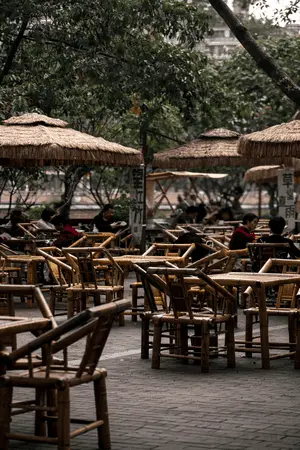
Teahouse Culture
Chengdu’s gray, drizzly weather makes sun-seeking a local sport. When the clouds part, everyone rushes to teahouses for “Ba Ba Cha” (open-air tea). Sitting in People’s Park with a “Gaiwan” cup, you’ll see thousands of bamboo chairs filled with people chatting, ear-cleaning, and simply wasting time. It’s the ultimate city living room for everyone.
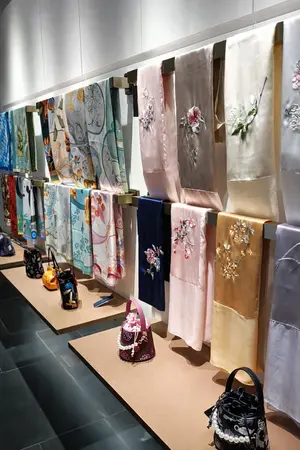
Shu Embroidery & Brocade
With over 2,000 years of history, Shu Brocade and Embroidery are the soul of Chengdu’s artistry. These crafts are famous for their intricate patterns and vibrant colors. Shu Brocade was once a luxury for emperors, traded along the Silk Road. Today, these “soft gold” textiles represent the city’s deep patience and commitment to beauty and traditional elegance.

Taoist Culture
Mount Qingcheng, located just outside Chengdu, is the birthplace of Taoism. The mountain’s emerald forests and quiet temples embody the concept of “Qingcheng Quietness.” It’s where the philosophy of “harmony between man and nature” feels real. Locals hike here to escape the city, breathe the mountain air, and find spiritual balance in a busy world.
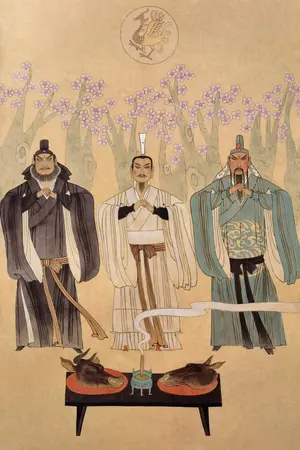
Three Kingdoms Culture
Chengdu was the capital of the Shu Kingdom, a legendary era of heroes and strategy. The Wuhou Shrine is dedicated to Zhuge Liang, the smartest man in Chinese history. This history isn’t just in books; it’s in our blood. We value loyalty, wisdom, and the “heroic spirit” that defined the Three Kingdoms, making Chengdu a place where history feels alive.

Sichuan Opera
Our opera is famous for being funny and lively. The “Face-Changing” trick—where performers change their colorful masks in a fraction of a second—is a closely guarded secret. It’s fast, exciting, and a little bit magical, just like the city itself.
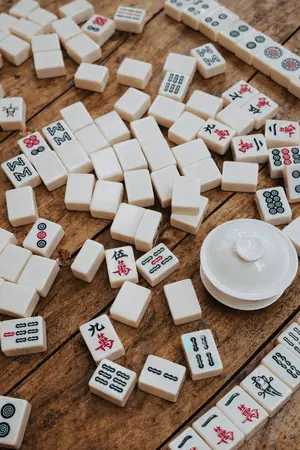
National Sport: Mahjong
If there’s a flat surface in Chengdu, there’s a Mahjong game on it. From balconies to rivers, the “clack-clack” of tiles is the city’s soundtrack. It’s more than gambling; it’s our social glue. Friends, families, and neighbors bond over tiles for hours. If you haven’t sat at a square table with three locals, you haven’t truly experienced the Chengdu life.
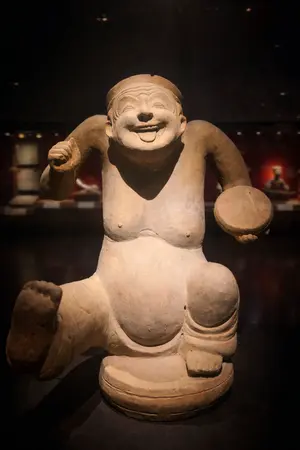
Optimistic Humor
Chengdu people are known for being “laid-back” —down-to-earth and funny. We like to make jokes, we don’t take life too seriously, and we believe that no matter how big a problem is, it can be solved over a hot pot. In many cultures, mourning is strictly somber, but here, it’s natural to see families playing Mahjong next to a wake. It’s not disrespect; it’s our way of celebrating life and staying optimistic.
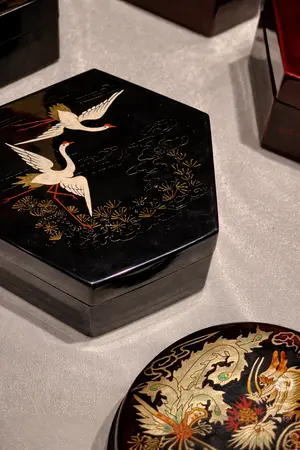
Chengdu Lacquer Art
This is one of China’s most ancient crafts, known for its “three-dimensional” beauty. Using natural sap and intricate carving, Chengdu Lacquer Art creates stunning, glossy pieces that last centuries. Each item takes months of meticulous work, layering, and polishing. It reflects the city’s hidden craftsmanship—delicate, resilient, and undeniably sophisticated.
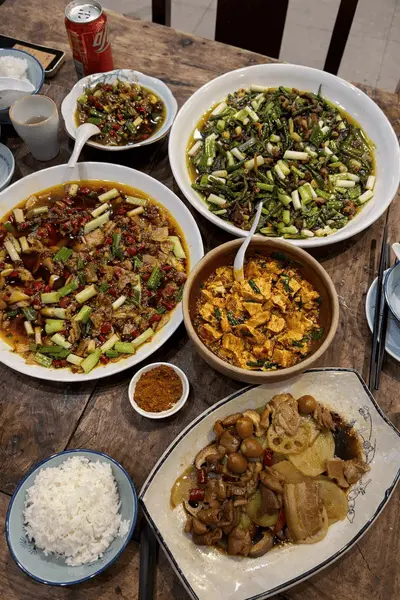
Chengdu Cuisine: More Than Just Spicy
Most people think Sichuan food is just “spicy.” That’s like saying a symphony is just “loud.” Chengdu cuisine is famous for having “One dish, one shape; a hundred dishes, a hundred flavors” (一菜一格,百菜百味). We focus on the 融合 (rónghé)—the artistic blending of seasonings.
The Numbing and the Spicy (麻辣 – Má Là)
Yes, we love our chilies and our Sichuan peppercorns. The “Má” (numbing) sensation is what makes our food unique. It’s a citrusy, tingly feeling that actually opens up your taste buds so you can taste the complexity of the spices. But notice the balance: we use ginger, garlic, star anise, cinnamon, and fermented bean paste (the “soul” of Sichuan food) to create layers of flavor.
The 24 Flavor Profiles
Traditional Sichuan cooking actually recognizes 24 distinct flavor profiles.
Fish-Fragrant (鱼香味): Sweet, sour, and spicy (with no fish!).
Strange Flavor (怪味): A mind-blowing mix of salty, sweet, numbing, spicy, sour, and savory.
Lychee Flavor (荔枝味): A delicate balance of sweet and sour used in Kung Pao Chicken. In Chengdu, a master chef is judged by how well they balance these flavors, not just how much chili they use.
The “Wet” and the “Fresh”
Because we live in the “Land of Abundance,” our ingredients are incredibly fresh. We love “wet” cooking—braising, poaching, and steaming—which keeps the meat tender. We also have a deep obsession with Offal (内脏). From pig brains to duck intestines, we believe these parts have the most interesting textures. If you can get past the idea of it, you’ll find that a spicy duck intestine in a hot pot is the ultimate “crunchy” delight.
Chengdu Dialect
To understand Chengdu, you have to understand our tongue. The essence of the Chengdu dialect is “Ya Jian” (牙尖)—it’s sassy, slightly mocking, and very playful. We aren’t being mean; we’re just being witty!
The Linguistic Quirks:
- The “n” and “l” Swap: We often can’t tell the difference. Nǎlǐ (where) might become lǎlǐ.
- No Retroflex: We rarely curl our tongues. The “sh,” “ch,” and “zh” sounds usually flatten out into “s,” “c,” and “z.”
- Soft Tones: Everything sounds a bit more melodic and “sing-songy” than standard Mandarin.
Chengdu Lifestyle | Life at an Easy, Human Pace
In Chengdu, people often describe life with two words: anyi (comfortable) and bashí (just right). This lifestyle isn’t a fixed routine — it’s an attitude. A way of finding your own rhythm inside a fast-moving world.

A Philosophy of Slow Living — It Starts with Tea
The clearest expression of Chengdu’s slow life is its teahouse culture. Step into Heming Teahouse in People’s Park, order a simple jasmine tea, and sit by the water on a bamboo chair. Around you, locals are ba longmenzhen — chatting about daily life. Time doesn’t stop here; it simply slows down.
Another uniquely Chengdu experience is ear cleaning in teahouses — a small ritual of comfort that feels oddly relaxing. And beyond teahouses, the city’s parks define everyday life. Morning tai chi, afternoon chess games, evening strolls in Huanhuaxi Park — these moments form the quiet backbone of the city.
A Food-Led Way of Living
Food in Chengdu is never rushed — and never secondary.
Hotpot and chuanchuan (skewers) are social rituals: meals that stretch for hours, built around conversation as much as spice. Street snacks like dumplings, sweet noodles, bobo chicken, and freshly baked cakes fill the gaps between meals, creating a constant, comforting rhythm.
What surprises many visitors is that Chengdu is also deeply international. From Japanese ramen to Italian kitchens and Middle Eastern cafés, global flavors have found a home here — blending seamlessly into the city’s daily life.
Where Art, Trends, and Old Streets Meet
Chengdu’s charm lies in how effortlessly old and new coexist. Traditional alleyways sit just minutes away from modern creative spaces. Independent bookstores, quiet galleries, and art zones offer places to pause and think, while neighborhoods like Yulin Road and University Road invite slow wandering through cafés, small shops, and record stores.
One standout is REGULAR·Source Wild, often called “Chengdu’s Daikanyama” — a space where architecture, greenery, and design come together in a distinctly local way.
Relaxed, Yet Real
Chengdu’s lifestyle is often praised for its relaxed atmosphere, but it’s not without tension. As more people move here, competition and rising costs are real. Yet compared to China’s largest megacities, Chengdu still offers something rare: a life that feels attainable. You can sleep in, meet friends for drinks on the street, or sit in the sun doing absolutely nothing — without feeling guilty.
In the end, Chengdu is about balance. Between tradition and modernity. Between ambition and ease. It’s a city that teaches you not how to escape life, but how to live it more comfortably. And that’s why so many people arrive — and quietly decide to stay.
Chengdu Maps
Google Maps does not work well in China. You must download one of these:
Amap (高德地图 – Gāodé Dìtú): The local favorite. Extremely accurate for walking directions and hidden alleys.
Baidu Maps (百度地图): Very similar to Amap, excellent for public transport routes.
Apple Maps: If you have an iPhone, this actually works quite well in China using local data, and it’s in English!