Why is Chengdu the “Gay Capital” of China? A Traveler’s Guide to Gaydu
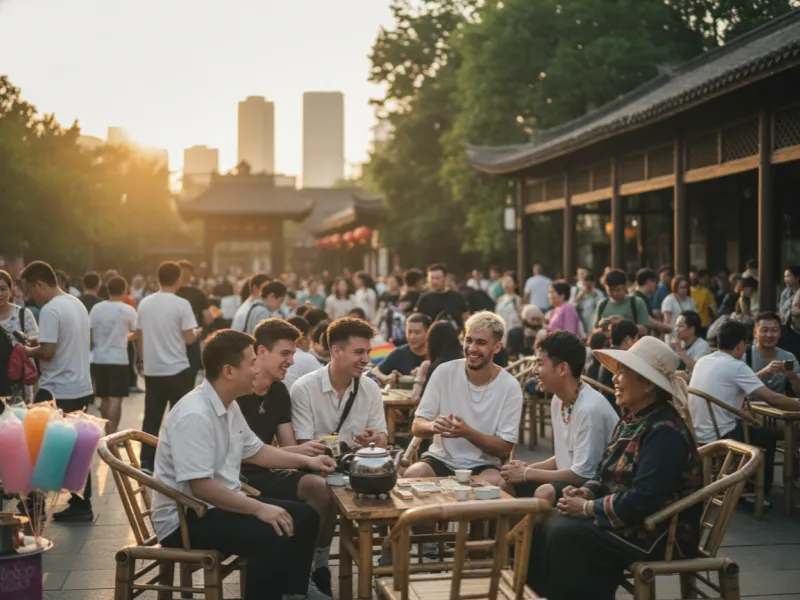
Hey there! I’m Hardy. If you ever find yourself wandering through the trendy lanes of Taikoo Li in Chengdu, you’ll notice something pretty quickly. It’s not just the high-end fashion or the giant climbing panda—it’s the energy of the people. You see guys walking hand-in-hand, groups of friends with bold, expressive styles, and a level of openness that feels rare.
In China, Chengdu has a very famous nickname: “Gaydu”. It’s a playful mix of the city’s name and the word “Gay.” For many in the LGBTQ+ community across China, this city is more than just a place to live; it’s a haven.
When I first visited, I was curious. Why this city? Why is it so much more relaxed than the political center of Beijing or the fast-paced financial world of Shanghai? After many bowls of spicy noodles and long afternoons in tea houses, I started to understand that this inclusivity isn’t a modern trend—it’s baked into the very dirt of Sichuan.
Here is my guide to understanding why Chengdu became the rainbow heart of China.
1. The “San Francisco of the East”
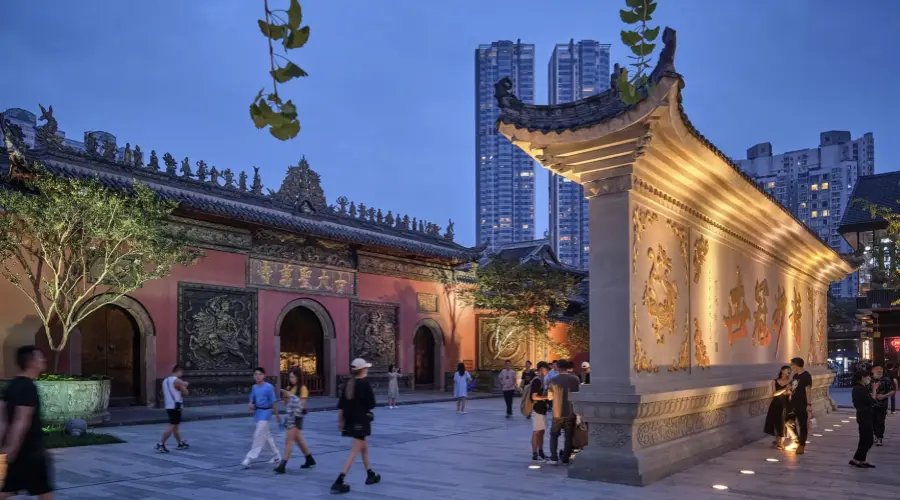
I remember my first evening near the Jinjiang District. I was sitting at a small craft beer stall by the river. To my left was a group of rappers in baggy clothes, and to my right was a same-sex couple sharing a plate of spicy rabbit heads. Nobody was staring. Nobody was whispering. In fact, the local “aunties” walking their dogs didn’t even blink.
That was the moment I realized the nickname “Gaydu” wasn’t just an internet joke. It’s a reality. While Beijing is about power and Shanghai is about money, Chengdu is about life. The city has a “live and let live” attitude that reminds me of San Francisco or Berlin. It’s a place where you can be a little “different” and still feel like you belong.
For travelers, this makes Chengdu one of the most vibrant and welcoming spots in Asia. The streets feel safer and more creative because people aren’t afraid to be themselves.
2. A History of Newcomers: The Melting Pot
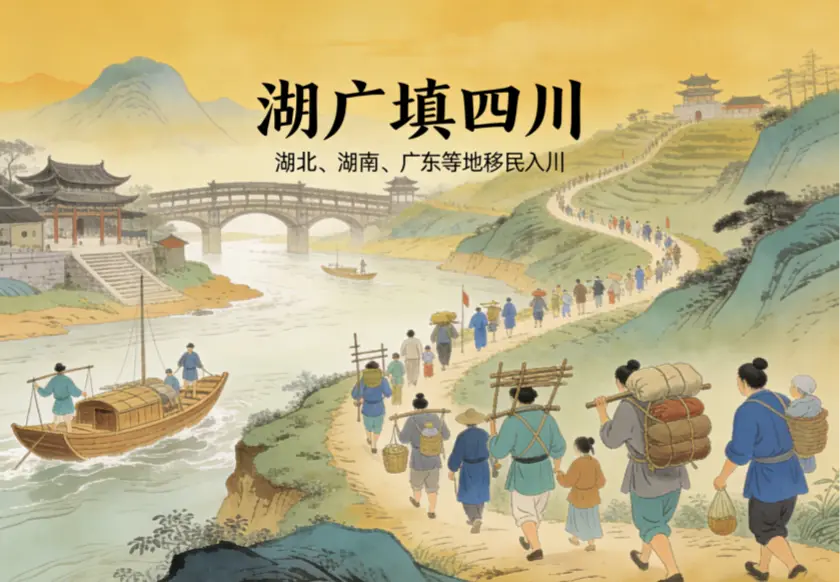
To understand why Chengdu is so open today, we have to look back a few hundred years. Most people who live in Chengdu today aren’t “original” Sichuanese. Centuries ago, the province went through a massive period of migration called “Huguang Filling Sichuan.” People moved here from all over southern and central China to start new lives.
Why does this matter? Because when you have a city made of immigrants, the old, rigid rules of the “clan” start to break down. In many parts of eastern China, family traditions and ancestral rules are incredibly strict. You have to follow the path your great-grandfather laid out for you.
But in Chengdu, those chains are much thinner. Because everyone came from somewhere else, they had to build a new society based on getting along with neighbors rather than strictly following ancient family hierarchies. This history created a culture that is naturally more open to “the new” and “the different.” If you’re a newcomer in Chengdu, you aren’t an outsider—you’re just the latest addition to the mix.
3. The “Taoist” Way: Going With the Flow
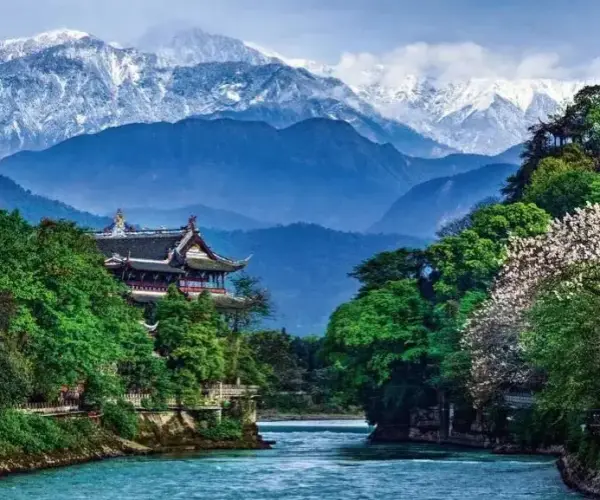
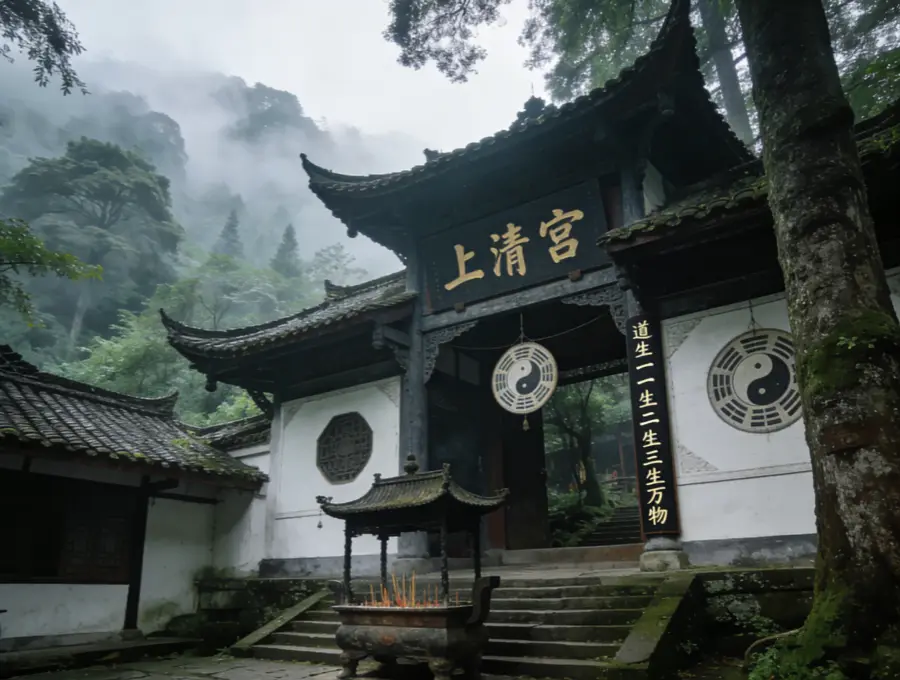
You can’t talk about Sichuan without talking about Taoism. This ancient Chinese philosophy was born in the mountains surrounding Chengdu, like the misty Mount Qingcheng.
Taoism is very different from the strict, rule-based nature of Confucianism. It’s all about Wu Wei, which basically means “not forcing things.” It’s about following the natural flow of life. If the river turns left, you turn left.
This philosophy has seeped into the local DNA. When you talk to a Chengdu local about someone being gay, their response is often a shrug and a smile. They might say, “As long as they are happy, what does it matter?” This isn’t necessarily a political stance; it’s a natural tolerance. They believe that everyone has their own “Tao” or path, and it’s not their job to block it. This “go with the flow” mindset is the secret sauce that makes the city so incredibly chill.
4. Tea House Culture: The Art of Minding Your Own Business
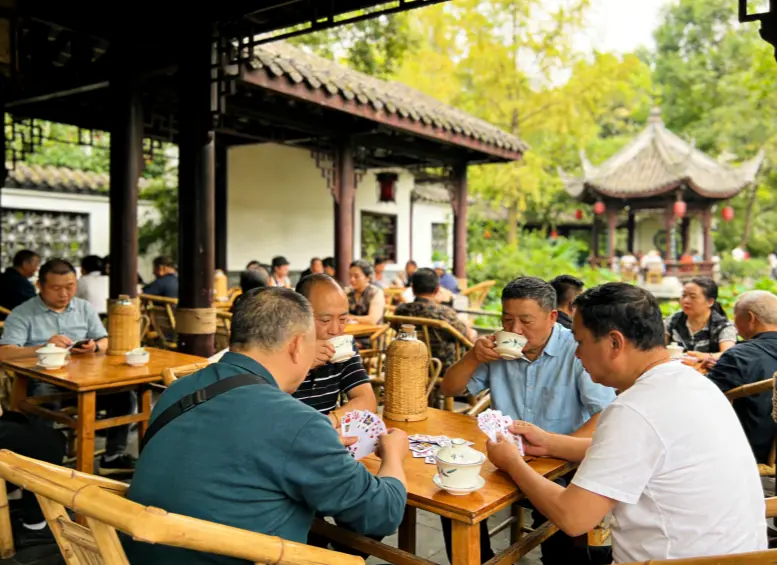
If you want to find the soul of Chengdu, go to a tea house. You’ll see thousands of people sitting in bamboo chairs, sipping green tea, and clicking mahjong tiles. This is what locals call Man Shenghuo—the Slow Life.
In Chengdu, leisure is a professional sport. People spend hours just “being.” And here is the thing: when you spend your life relaxing and focusing on your own happiness, you don’t have the time or the interest to police how other people live their lives.
The tea house is the ultimate “neutral ground.” It’s a place where a wealthy businessman, a young artist, and a retired worker all sit together. This culture of public relaxation has made the city’s parks and squares safe spaces for everyone. You’ll often see older gay men meeting in certain corners of public parks to play cards or chat. They don’t have to hide in dark basements; they are just another part of the park’s daily life.
5. The Modern Magnet: Fashion, Art, and Gen Z
Today, Chengdu is a magnet for young people from all over China. If you are a kid growing up in a conservative small town in a distant province and you feel like you don’t fit in, where do you go? You go to Chengdu.
The city has become a hub for everything “alternative.” It’s the capital of Chinese rap, the center of the “cosplay” and anime world, and a leader in underground electronic music. Because the city is more affordable than Shanghai, artists and creators can actually afford to live here.
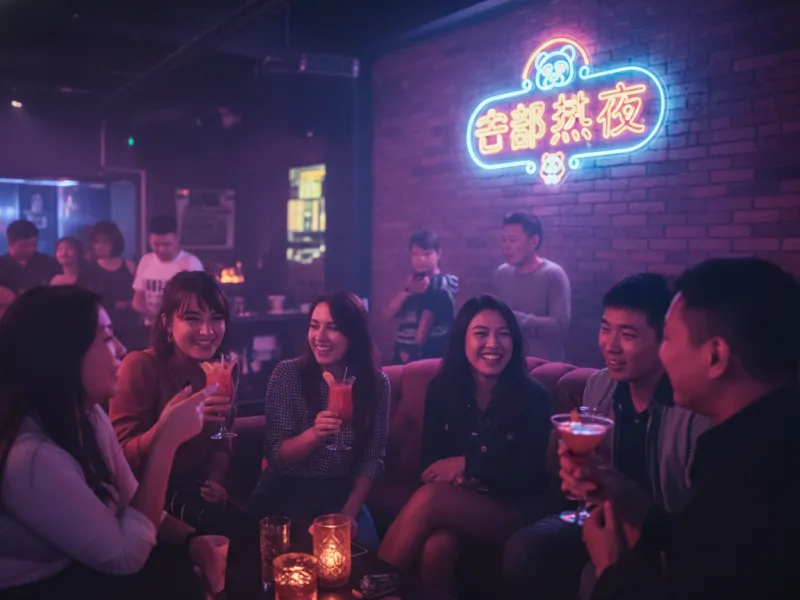
This has created a massive “Pink Economy.” There are hundreds of LGBTQ-friendly bars, cafes, and dance clubs. But it’s more than just nightlife. It’s the fact that a gay couple can go to a regular hot pot restaurant or a bookstore and feel perfectly normal. For a lot of young people in China, Chengdu is the place where they can finally stop looking over their shoulder and start living.
6. Hardy’s Tips for Travelers: Navigating the Inclusivity
If you’re planning to visit and want to experience this side of the city, here is my advice:
- The Vibe Check: Spend an afternoon in the 339 TV Tower area. It’s the heart of the nightlife scene. You’ll see a mix of everything—high fashion, street art, and very diverse crowds.
- Taikoo Li People-Watching: This is the most famous shopping area in the city. It’s basically a runway for the “street style” photographers you see on TikTok. It’s the best place to see the city’s bold fashion and open culture in broad daylight.
- Public Displays of Affection (PDA): Even though Chengdu is very open, Chinese culture in general is still a bit modest. You won’t see many couples—straight or gay—having big “make-out” sessions in public. Holding hands or a quick hug is totally normal, but it’s always good to be mindful of the local pace.
- Safety: You’ll find that people are incredibly polite. Even if someone doesn’t “understand” your lifestyle, they are very unlikely to be rude or aggressive. Chengdu is famous for its “soft” heart.
7. Conclusion: The Heart of the Southwest
At the end of the day, Chengdu’s reputation as a gay-friendly city isn’t just about one community. it’s a reflection of the city’s overall kindness. It’s a place that values a good laugh, a spicy meal, and a long afternoon of tea over the stress of judging your neighbor.
When you visit, you’ll realize that “Gaydu” is just another way of saying that Chengdu is a city with a big heart. It’s a place where the “standard” way of living is just one of many options.
Whether you’re there for the pandas, the spicy hot pot, or the vibrant nightlife, you’ll feel that special Chengdu magic—the feeling that you can just be yourself, and that’s more than enough.