Why Is Moutai So Famous? A Traveler’s Guide to China’s Most Iconic Liquor
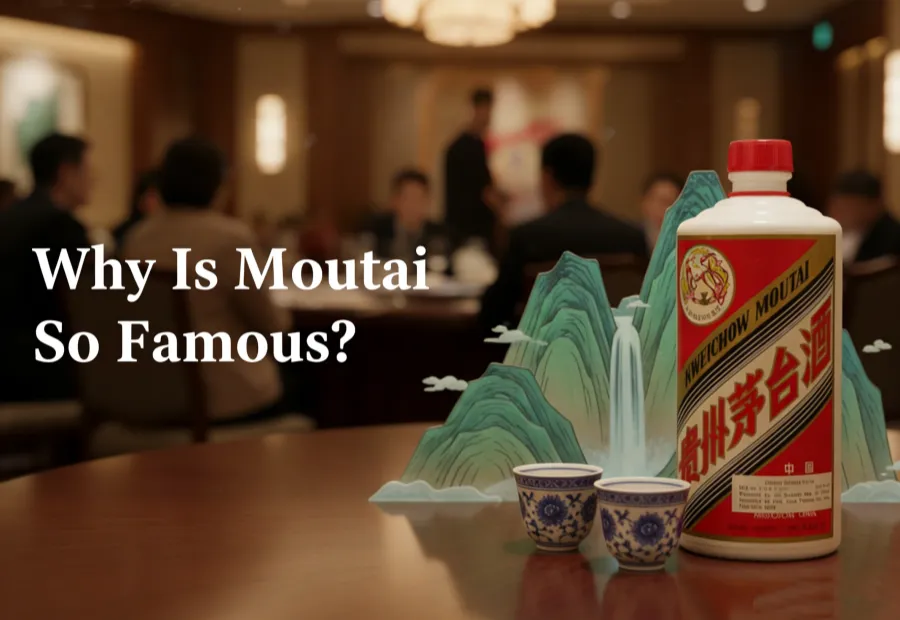
Hey there! I’m Hardy. If you’ve ever spent time at a bustling dinner table in China, you’ve probably seen it: a distinct, milky-white bottle with a red and gold label. People treat it like liquid gold, pouring it into glasses so tiny they look like dollhouse accessories.
That’s Moutai.
When I was a kid, I secretly took a tiny sip—and wow, it hit me like a punch: sharp, fiery, and almost burning my nose. But then I watched the older men around the table handle the bottle—with a mix of respect, excitement, and pure joy. Over time, after seeing it at more dinners and even visiting the misty, humid hills of Guizhou, I realized something: Moutai isn’t just a drink. It’s a piece of China’s soul.
If you’re planning a trip or just curious why this bottle dominates every high-end shelf, here’s my traveler’s guide to understanding the legend of Moutai.
1. The Bottle That Stops the Room
I remember sitting at a heavy round table in a dim sum restaurant a few years back. It was a standard business dinner until the host pulled a box out of a silk bag. The room went quiet. Conversations paused. Even the waiters slowed down.
The host carefully broke the seal of a Moutai bottle. Within seconds, a thick, savory aroma wafted across the table. It’s a smell you never forget—earthy, like soy sauce and tropical fruit mixed together.
In the West, we have expensive champagne or rare whiskies. But in China, Moutai is in a league of its own. It’s the ultimate “face” drink. If someone opens a bottle for you, they aren’t just buying you a drink; they are telling you that you are incredibly important to them. It’s a silent language of respect that has existed for decades.
2. What Exactly Is Moutai? (The 101)
Before we get into the “why,” let’s talk about the “what.” Moutai is a type of Baijiu (which literally means “white liquor”).
Think of Baijiu as the umbrella term, like “Whisk(e)y.” Under that umbrella, you have different styles. Moutai is the king of the “Sauce Aroma” category. It’s made from organic sorghum (a hearty grain) and wheat.
The “Champagne” of China
Just like you can’t call sparkling wine “Champagne” unless it comes from that specific region in France, you can’t call Baijiu “Moutai” unless it’s made in the town of Maotai.
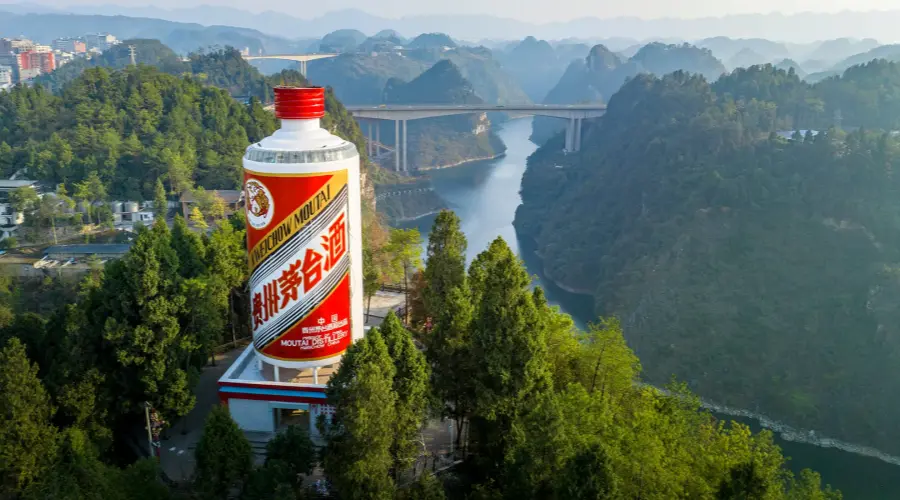
This town is tucked away in the Chishui River Valley in Guizhou province. It’s a place where the air is thick with moisture and unique microbes. People have tried to build Moutai factories in other parts of China using the same ingredients and the same masters, but it never tastes the same. The environment—the water from the river and the specific heat of the valley—is the secret ingredient.
3. A History of Power and State Banquets
Why is this specific brand so famous compared to the hundreds of other Baijiu brands? It comes down to its history with the Chinese government.
After the founding of the People’s Republic of China, Moutai became the “National Liquor.” It was the drink used by leaders like Mao Zedong and Zhou Enlai to toast visiting foreign dignitaries.
The Nixon Moment
One of the most famous stories involves U.S. President Richard Nixon’s historic visit to China in 1972. During the state banquet, Zhou Enlai toasted Nixon with Moutai. There’s a famous photo of them raising those tiny glasses.
Back then, the Western world didn’t know much about Chinese spirits. Legend has it that Nixon’s daughter later told him not to drink too much of it because it was “firewater.” But that moment cemented Moutai’s status as the drink of diplomacy. When you drink Moutai, you are literally drinking the same toast that changed world history.
4. Why the Price Tag? “Liquid Gold” Explained
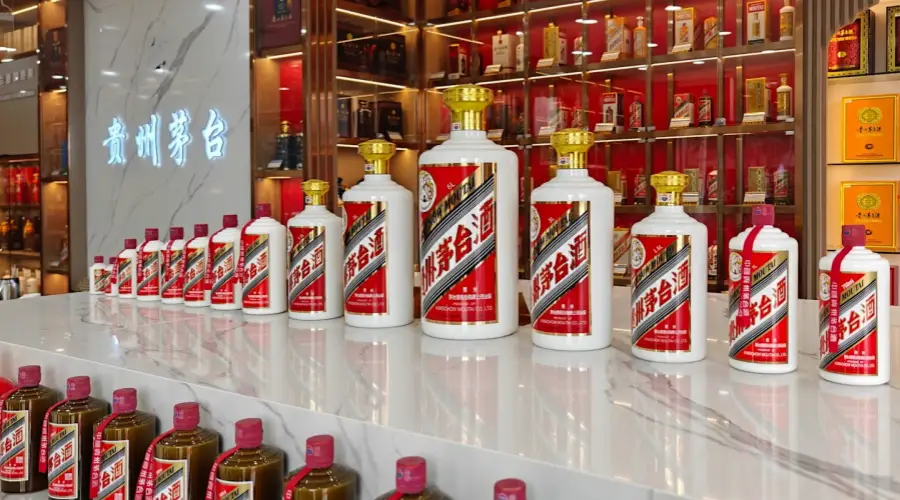
If you walk into a liquor store in Shanghai or London, you’ll see Moutai prices that make your eyes water. A standard bottle can easily cost $400, and vintage bottles can go for tens of thousands at auctions.
Why is it so expensive? It’s not just marketing; it’s the labor.
- The Five-Year Rule: From the moment the grain is harvested to the moment the bottle is sold, at least five years have passed.
- The Cycle: The production involves nine steamings, eight fermentations, and seven distillations.
- Aging: After distilling, the spirit is aged in large earthenware jars. This allows the harshness to mellow out and the complex “sauce” flavors to develop.
Most spirits are mass-produced in weeks or months. Moutai is a slow-motion art form. Because the supply is limited by the geography of the town and the long aging process, demand always outstrips supply.
In China, many people don’t even buy Moutai to drink it. They buy it as an investment. They put bottles in their cellar (or under the bed!) because the value usually goes up every year. It’s safer than the stock market for some!
5. The Traveler’s Tasting Guide: How to Drink It
If you are invited to a dinner and a bottle of Moutai appears, don’t panic! Here is how to handle it like a pro.
The Tiny Cup
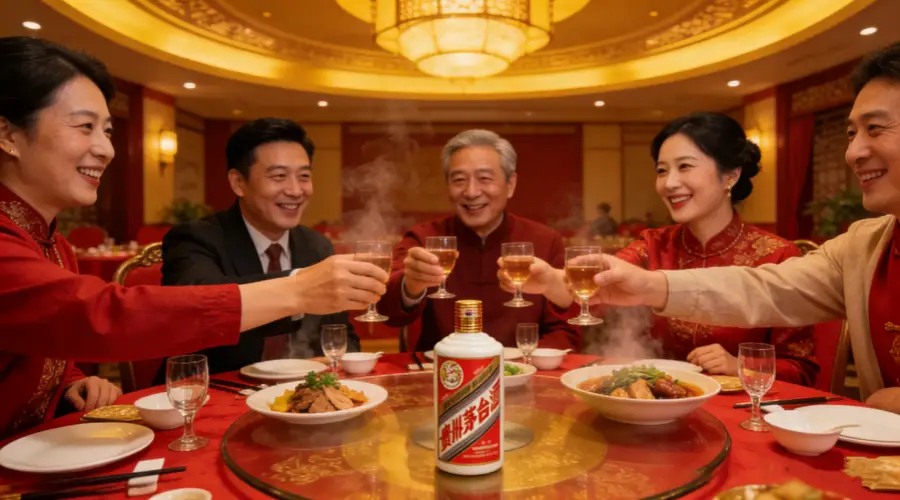
Moutai is usually 53% alcohol. That is strong. This is why it’s served in those tiny, thimble-sized glasses. It’s meant to be sipped and appreciated, or “shot” in a social context, but never gulped like a pint of beer.
The “Ganbei” Culture
You’ll hear the word “Ganbei!” (literally “dry glass”) constantly. When someone toasts you, you should make eye contact, say “Ganbei,” and drink.
Pro-tip: If you want to show extra respect, hold your glass with two hands. When you clink glasses with someone older or higher-ranking than you, try to keep the rim of your glass slightly lower than theirs. It’s a small gesture that shows you know your stuff!
The Flavor Profile
Your first sip might be a shock. It’s intense. But look for the layers. You’ll taste:
- The Initial Hit: A savory, soy-sauce-like saltiness.
- The Mid-Palate: Hints of roasted nuts, cocoa, and maybe a bit of fermented bean.
- The Finish: A surprisingly sweet, floral aftertaste that lingers for a long time.
Even if you don’t love it the first time, try a second sip after eating some spicy food or a piece of fatty pork. The way the liquor cuts through the grease is magical.
6. Hardy’s Tips: Buying and Avoiding Fakes
Because Moutai is so valuable, there is a huge market for counterfeits. I’ve seen some very convincing fakes in my time. As a traveler, you have to be careful.
- Avoid “Street Deals”: If a guy in a small alleyway offers you Moutai for $50, walk away. It’s either fake or, worse, “re-filled” (where they put cheap liquor into a real empty bottle).
- Go to the Source: Buy from high-end department stores, official Moutai boutiques, or the duty-free shop at the airport.
- Check the Tech: Modern Moutai bottles have NFC chips in the caps. You can actually scan them with a smartphone app to verify they are real.
- The “Flying Fairy” Logo: Look for the iconic logo of the two fairies. It should be crisp and perfectly printed.
7. Conclusion: More Than a Buzz
At the end of the day, Moutai isn’t about getting drunk. In fact, if you get rowdy on Moutai, you’ve missed the point.
Moutai is about the connection between people. It’s about the celebration of a new business partnership, the joining of two families at a wedding, or the honoring of a guest who has traveled from far away.
When you sit down at a table in China and that red-and-white bottle appears, you aren’t just looking at a drink. You’re looking at centuries of craftsmanship and the weight of Chinese tradition. Even if the taste is a bit bold for you, I encourage you to take that tiny glass and join the toast. You’re drinking a story that’s been aging for a long, long time.