Is It a Good Idea to Travel China During May Day Holiday?
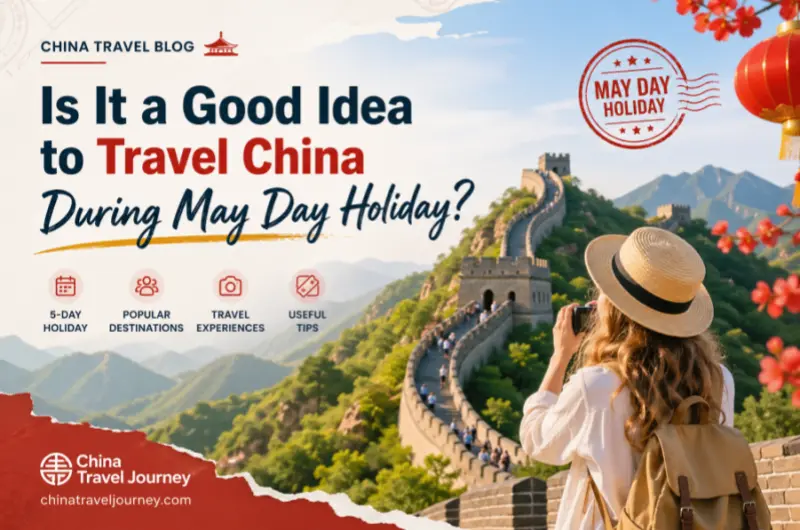
Hey there! I’m Hardy. If you’re looking at the calendar right now—and since it’s already late April, you probably are—you might see that big block of holiday dates starting on May 1st. In China, we call this the May Day Holiday, or Labor Day.
I can tell you from experience, this is one of the most talked-about weeks of the year for anyone living in or traveling through China. There’s a specific kind of buzz in the air. People are checking their phones every five minutes to see if train tickets have opened up, and hotel prices in places like Guilin or Xi’an are climbing faster than a hiker on Mount Tai.
So, the big question I always get from my friends visiting from abroad is: “Hardy, is it actually a good idea to travel during May Day, or am I going to regret every second of it?”
The honest answer? It depends on what kind of traveler you are. If you love a quiet, lonely mountaintop, this might be a challenge. But if you want to see China at its most energetic, colorful, and “alive,” there is nothing quite like it.
Here is my honest take on what to expect if you decide to dive into the May Day madness.
1. The “People Mountain, People Sea” Experience
Let me start with a story. A few years back, I decided I had to see the West Lake in Hangzhou during the May Day break. I thought I was being smart by going early in the morning. When I got there at 7:00 AM, I realized “early” was a relative term.
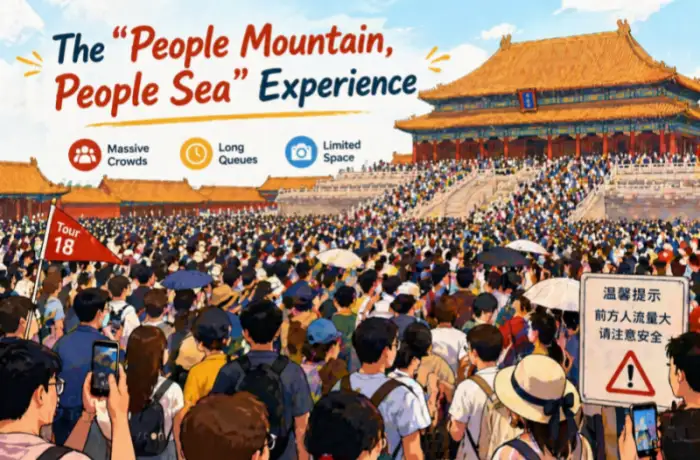
There is a famous Chinese idiom: Ren Shan Ren Hai (人山人海). It literally translates to “People Mountain, People Sea.” Standing on that broken bridge in Hangzhou, I finally understood what it meant. There were so many people that you couldn’t see the ground. It was just a sea of colorful umbrellas, sun hats, and happy families.
At first, I felt a bit of panic. But then, I looked around. I saw three generations of a family laughing over a shared bag of snacks. I saw young couples taking “perfect” photos despite the crowds. There was a collective sense of joy. In China, a crowd isn’t always a “nuisance”—it’s a sign that something is re nao (festive and lively).
If you come during this week, you have to embrace the crowd. It is part of the cultural landscape. You aren’t just visiting a monument; you are witnessing a massive, national celebration of the freedom to move and explore.
2. What Exactly is the May Day Holiday?
Originally, May 1st was just a single day to celebrate Labor Day. But over time, the Chinese government shifted things around to create a longer break, usually five days.
This is the first “Golden Week” of the spring. By the time May 1st rolls around, people have been working hard since the Lunar New Year in January or February. They are itching to get out. The weather is finally warm, the winter coats are packed away, and everyone has a bit of “travel fever.”
Because it’s a fixed holiday for the entire country (over 1.4 billion people!), everyone hits the road at the exact same time. This creates a massive surge in demand for everything—flights, trains, hotels, and even restaurant tables.
3. The Good News: Why May is Actually Beautiful
I don’t want to scare you off, because there is a very big reason why everyone travels in May: The weather is perfect.
In many parts of China, May is the “Goldilocks” month. In the north (like Beijing), the biting winter wind has stopped, and the brutal summer heat hasn’t started yet. In the south (like Yunnan or Sichuan), the flowers are in full bloom, and the air is fresh and sweet.
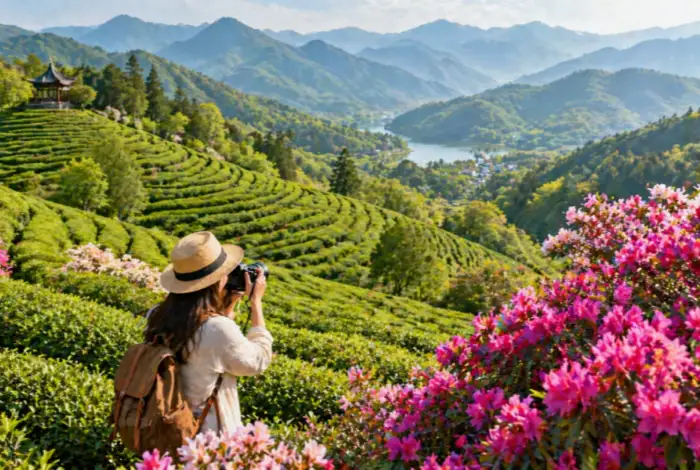
If you go to the tea-growing regions around Hangzhou or Suzhou, you’ll see the hills covered in vibrant, neon-green tea bushes. If you head to the mountains, you’ll find wild rhododendrons and azaleas blooming. It’s a photographer’s dream.
Also, because it’s a holiday, the cities themselves take on a festive look. Streets are cleaned, flowers are planted in public squares, and there are often special light shows or cultural performances in the evenings. The energy is infectious. People are in a good mood because they aren’t at their desks!
4. The Reality Check: The Hurdles You’ll Face
I believe in being a straight shooter with my friends, so let’s talk about the tough parts.
Transport is a Battle
High-speed rail tickets in China are amazing, but during May Day, they are like gold dust. They often sell out within seconds of being released. If you don’t have your ticket booked 15 days in advance (when the official window opens), you might find yourself stuck in one city.
The Price Spike
Since everyone is traveling, the “law of supply and demand” hits hard. A hotel room that costs $50 on a random Tuesday in March might cost $150 during May Day. Flights also lose their “budget” prices. You have to be prepared to spend a bit more for your plans.
The Wait Times
Want to see the Terracotta Warriors? Or go up the Pearl Tower in Shanghai? During May Day, “skip the line” doesn’t really exist. You might wait two or three hours just to get through the gate. This can be draining if you have a packed schedule.
5. Hardy’s “Survival Guide” for Travelers
If you’ve already booked your trip and you’re coming during the May Day break, don’t worry! I’ve navigated this many times, and I have a few tricks to help you enjoy it without losing your mind.
Avoid the “Big Five”
If you hate crowds, stay away from the most famous spots: The Great Wall (Badaling section), the Forbidden City, the Bund in Shanghai, the West Lake in Hangzhou, and the Terracotta Warriors. These places will be at maximum capacity.
Go “Niche” Instead
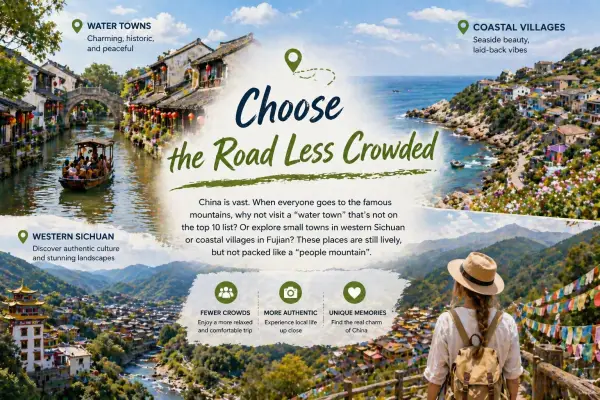
China is huge. While everyone is heading to the famous mountains, why not go to a smaller “water town” that isn’t on the top-10 lists? Or explore the smaller cities in western Sichuan or the coastal villages in Fujian? These places will still be busy, but they won’t feel like a “people mountain.”
The 6:00 AM Rule
If you really want to see a famous site, you have to be the first one at the gate. If a park opens at 7:00 AM, be there at 6:30 AM. You’ll get about one hour of relative peace before the tour buses and the “megaphone” guides arrive. Those 60 minutes will be the highlight of your day.
Eat Early or Late
Don’t try to go to a popular restaurant at 7:00 PM. You’ll be waiting for hours. I usually eat a late lunch around 2:00 PM or an early dinner at 5:00 PM. It makes a huge difference in your stress levels.
6. Cultural Context: Why the “Chaos” Matters
It’s easy for foreign travelers to look at the crowds and wonder, “Why would anyone do this to themselves?” But you have to understand the Chinese work culture. For many people, these “Golden Weeks” are the only times they get to travel with their families. They work long hours throughout the year, and this is their reward.
When you see a crowded street, you are seeing the result of decades of economic growth. People finally have the money and the time to see their own country. There is a deep sense of national pride in these travels.
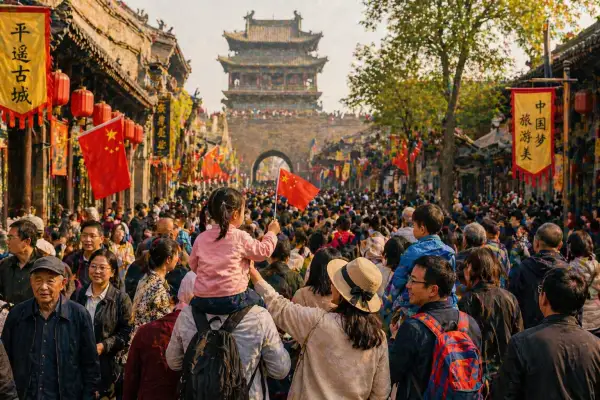
When I’m in a crowd during May Day, I try to remind myself that I’m participating in a huge social ritual. If you approach it with patience and a smile, you’ll find that people are incredibly helpful. I’ve had strangers share their snacks with me on a crowded train and grandmas give me tips on which photo spot is the best.
7. Conclusion: To Go or Not to Go?
So, back to our original question. Is it a good idea?
Go if: You want to see the best weather China has to offer, you love people-watching, and you are okay with a bit of “chaos.” You’ll get to see the country at its most vibrant and energetic.
Stay home if: You get stressed out by noise, you are on a very tight budget, or you have a “checked-off” list of famous monuments that you want to see in peace.
Personally, I think everyone should experience a Chinese holiday at least once. It changes your perspective on what “busy” means and gives you a deep look into the heart of modern Chinese life. Just remember to pack your patience, book your fly tickets early, and keep your sense of humor.