China’s Foot Bath Culture: More Than Just a Massage
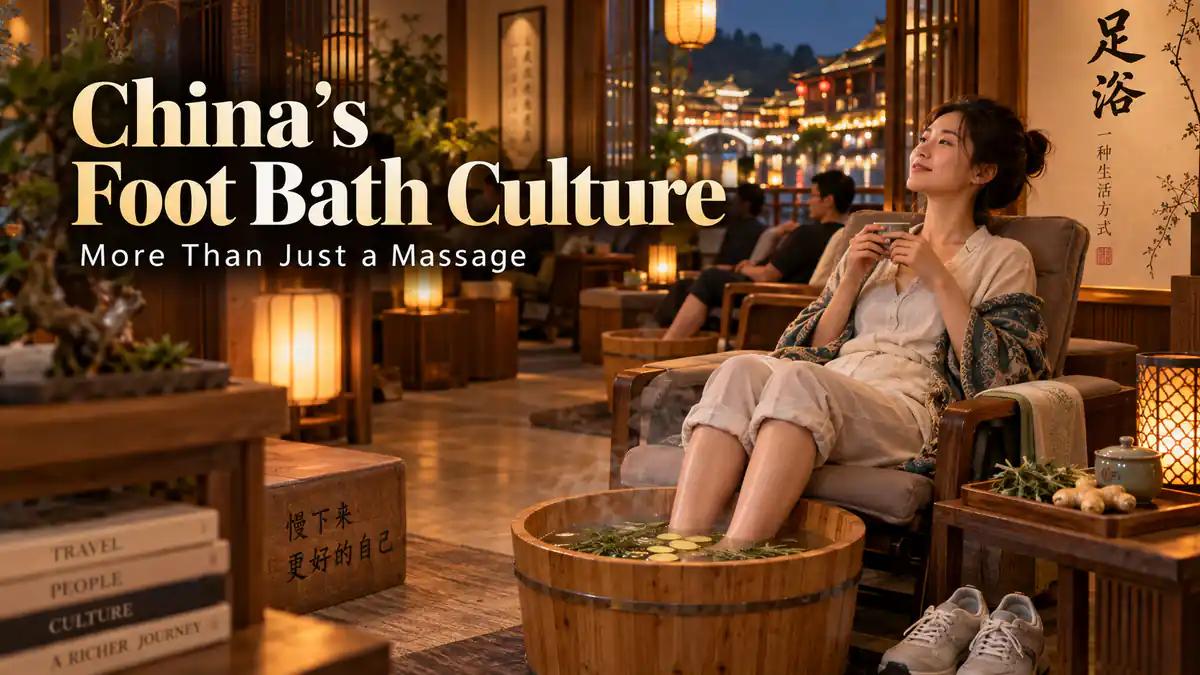
Hey there! I’m Hardy. If you’ve ever spent a full day exploring China—climbing the stone steps at Mount Huangshan, wandering through Beijing’s hutongs, or trying to keep up with the vertical maze of Chongqing—you already know one undeniable truth: your feet are going to beg for mercy.
The first time my legs felt like lead after a 25,000-step day, a local friend pointed to a brightly lit shop with warm wooden signs and said, “Trust me, we are going in here.” I expected a quick foot rub. Two hours later, I was leaning back in a reclining chair, sipping warm tea, eating melon seeds, and feeling ready for another day of travel.
In China, a foot bath can be much more than a treatment for tired feet. It is a familiar evening ritual, a social hangout, and one of the most comforting ways for travelers to slow down after sightseeing.
1. The Traveler’s Answer to a 25,000-Step Day
Traveling in China can feel like an endurance sport. Historic palaces are enormous, museums stretch across multiple floors, and many scenic areas involve far more climbing than the photographs suggest. By late afternoon, even comfortable shoes may not feel comfortable anymore.
Instead of returning to the hotel and calling it a night, many travelers follow the local habit of looking for a foot bath shop. You will find them in busy commercial districts, residential neighborhoods, and around major transport hubs. Walking into a clean, warm shop when you are exhausted can feel less like booking another activity and more like pressing a reset button on the day.
2. More Than a Massage: The Cultural Roots of Foot Care
Foot care has a long place in Chinese wellness traditions. You may hear the popular phrase that the feet are the body’s “second heart,” along with older ideas about keeping the feet warm and using pressure to promote a sense of balance.
These ideas are culturally important, but a foot bath is best understood as a relaxation experience rather than a medical treatment. If you have an injury, circulation problem, diabetes, broken skin, or another health concern, ask a qualified clinician whether hot water or massage is appropriate for you.
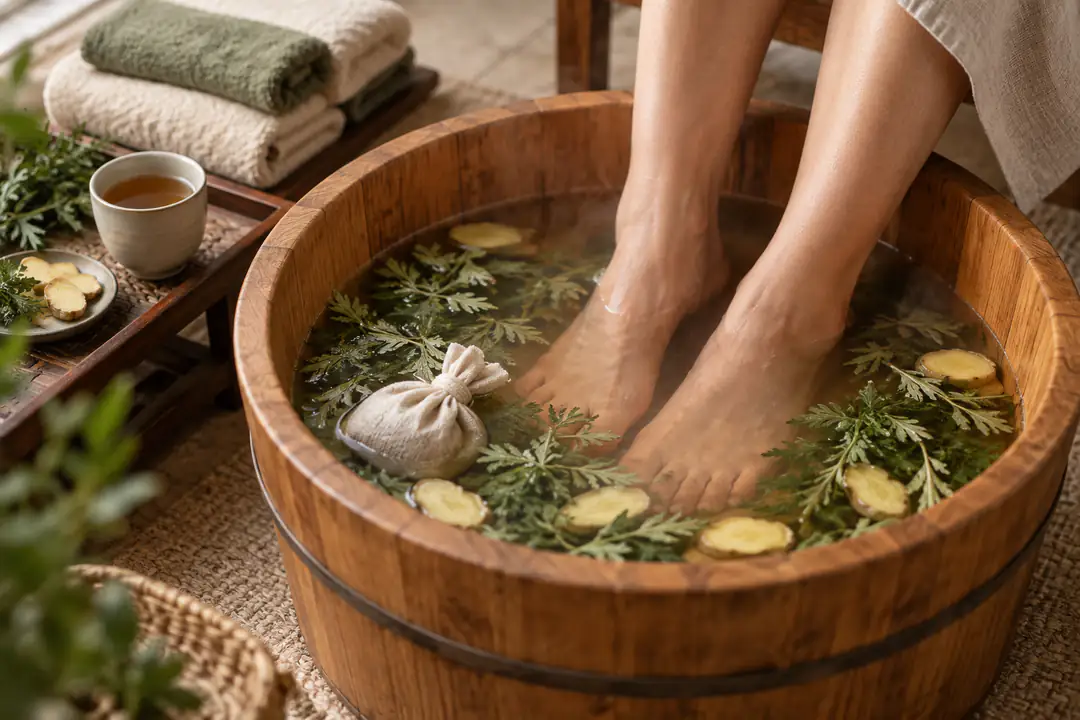
A typical session begins with a deep basin of warm or hot water. Some shops add ginger, mugwort, or a cloth pouch of mixed herbs. In traditional language, these ingredients are often described as helping the body feel warm and easing the sensation of “cold” or “dampness.” For a traveler, the immediate appeal is simpler: warmth, quiet, and relief after hours on the move.
The massage usually follows the soak. Pressure can range from gentle to surprisingly firm, so speak up early if anything feels uncomfortable. Lighthearted comments about a tender spot are part of the banter in some shops, but they should not be treated as a medical diagnosis.
3. The Modern Foot Bath Shop as a Social Oasis
If you imagine a silent, clinical treatment room, many modern Chinese foot bath shops will surprise you. The atmosphere is often closer to a comfortable lounge. Friends meet after work, families come on weekends, and colleagues chat while soaking their feet.
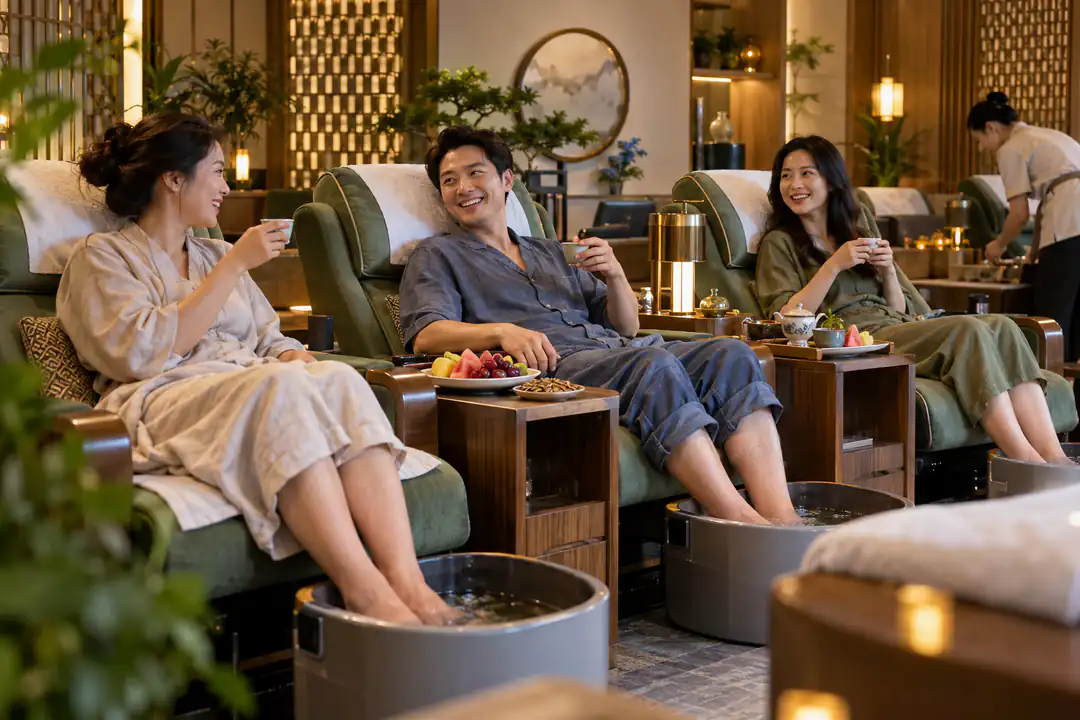
Hospitality is part of the experience. Depending on the shop and package, you may be offered hot tea, fruit, soup, melon seeds, or popcorn. Some lounges provide individual screens or Wi-Fi, while others keep the setting low-key and conversational.
- Snacks and tea: Small refreshments make a long session feel like an evening out rather than a quick service appointment.
- Entertainment: Larger shops may offer personal screens, music, or Wi-Fi at each chair.
- More than the feet: Some packages include a shoulder, neck, arm, or lower-leg massage. Check what is included before agreeing to a service.
4. How to Visit a Chinese Foot Bath Shop Without Stress
Walking into a local shop can feel intimidating if you do not speak Chinese, but the basic routine is straightforward. A little preparation makes the visit much easier.
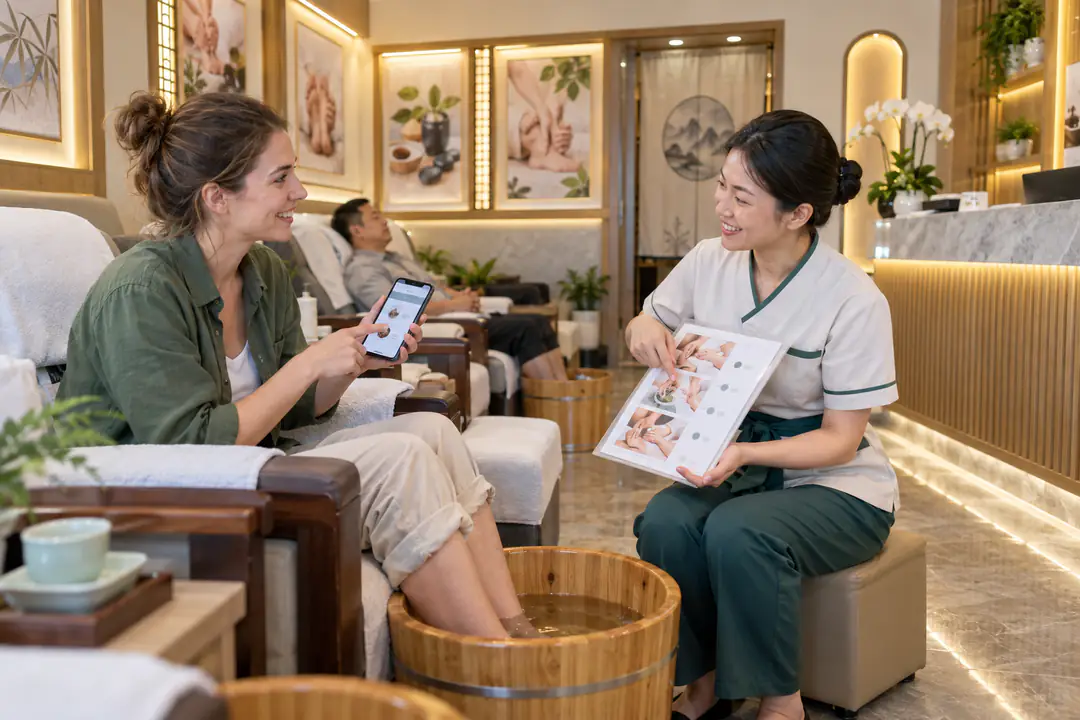
- Choose a reputable shop: Look for a clean, well-lit storefront, clearly displayed services, recent customer activity, and staff who explain the options without pressure.
- Confirm the price and duration: Ask what the package includes before the session begins. A translation app can help you avoid misunderstandings.
- Communicate the pressure: Say qīng yīdiǎn (轻一点) for “a little lighter” and zhòng yīdiǎn (重一点) for “a little stronger.” Stop the session if you feel sharp pain, numbness, or discomfort.
- Plan it into the trip: An evening foot bath can work well halfway through a busy itinerary or after a demanding attraction such as the Chengdu Panda Base or West Lake in Hangzhou.
- Keep personal boundaries clear: Select only the services you want, and leave if the menu, setting, or interaction makes you uncomfortable.
5. A Relaxing Look at Everyday Life in China
A Chinese foot bath reveals a side of travel that is easy to miss when you move quickly between landmarks. It shows how an ordinary wellness service can become a place for conversation, hospitality, and shared downtime.
The next time your legs ache and your pace starts to slow, do not assume the day is over. Find a reputable neighborhood shop, check the menu, settle into a warm chair, and experience one of China’s coziest evening rituals. Your feet may thank you—and the quiet pause may become one of the most memorable parts of the trip.